What Does an AI Content Farm Cost to Run? $300 a Month, $3 an Hour
A one-person AI content farm runs on about $300 a month in tools. A 40-minute AI documentary costs $1 to $3 and avatar video $0.05 a minute. The biggest earner is the course.
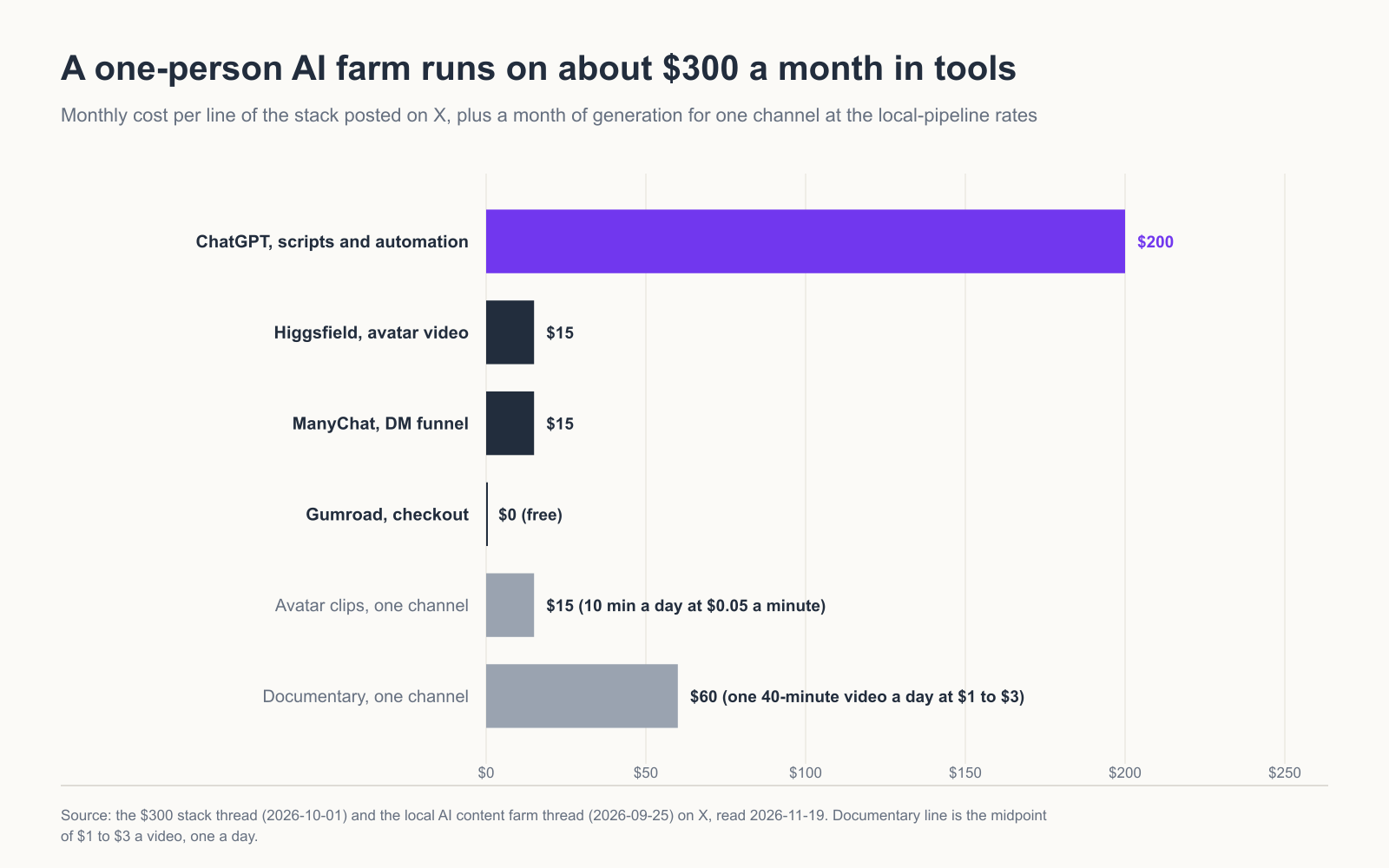
An AI content farm runs on about $300 a month in tools and $3 an hour of finished video. The most shared playbook on X lists the stack: $200 for ChatGPT automation, $15 for an avatar generator, $15 for a DM tool and a free checkout page. A local pipeline posted the same month makes a 40-minute AI documentary for $1 to $3 and avatar video for $0.05 a minute, with 10 minutes of human time a day per channel.
The revenue side is thinner than the pitch. A thousand US YouTube views pays $2.50 in kids content and $28 in personal finance, and TikTok’s Creator Rewards Program pays $0.40 to $1.00 per thousand qualified views. The operations that cleared real money sold a product through the video. The farms that cleared the most sold the farm itself, as a course to the next person asking how to start.
Key findings
- A one-person AI farm’s tool stack costs about $300 a month: $200 for ChatGPT automation, $15 for Higgsfield, $15 for ManyChat, $0 for Gumroad.
- An hour of AI documentary costs $1.50 to $4.50 to generate, an hour of avatar video $3, and an hour of AI UGC ads about $120 at $1 a clip.
- A thousand US YouTube views pays $32 in insurance, $28 in personal finance, $9 in history and $2.50 in kids content. TikTok pays $0.40 to $1.00 per 1,000 qualified views.
- 27 of the 1,227 Reddit posts we pulled ask how to start a faceless channel or clipping, and the course sellers answer with “comment yt and I’ll DM you”.
- One TikTok Shop supplement operation ran hundreds of AI-doctor videos, one at 1.3 million views, before an FDA salmonella recall and a February 2026 lawsuit.
- Platforms cut mass production, not AI: YouTube terminated 16 channels with 35 million subscribers and 4.7 billion views in January 2026, and Instagram stopped recommending repost accounts on April 30, 2026.
What is an AI content farm?
An AI content farm is a production system that turns one format into daily video across many channels, using a script model, a cloned voice, generated visuals, automated assembly and a posting schedule, so that the format is the asset and each channel is a test of it.
A script model writes to a template, a voice model reads it, a video model fills the screen, an assembly step adds captions and music, and a scheduler posts it. One operator whose first faceless channel made $600,000 built six more and put it plainly: the channel was never the asset, the blueprint was.
Multiply the blueprint by channels and you have the farm. The couples app Flame grew from $3,000 to $10,000 in monthly revenue on four or five phones on a rack, three to five TikTok accounts per phone, 15 to 20 accounts posting daily, posting 150 pieces a day at peak to test one hook. The account side is in how content farms run dozens of accounts.
What does it cost to run an AI content farm?
An AI content farm costs about $300 a month in tools for a one-person operation, plus generation credits of $1 to $3 for a 40-minute documentary or $0.05 a minute for avatar video, plus the phones if the farm runs on TikTok, plus about 10 minutes of a person’s day per channel.
The most bookmarked cost sheet in the X corpus, the fake-old-lady-sells-vitamins thread with 8,188 bookmarks on 607,691 views, names four lines and rounds the total to $300 a month.
| Line | Tool named | Monthly cost | What it does |
|---|---|---|---|
| Scripts and automation | ChatGPT | $200 | Writes scripts, runs the posting automation |
| Avatar video | Higgsfield | $15 | Generates the character and the clips |
| DM funnel | ManyChat | $15 | Replies to “comment X” with a link |
| Checkout | Gumroad | $0 | Takes the money |
| Avatar clips, one channel | Local pipeline | $15 | 10 minutes a day at $0.05 a minute |
| Documentary, one channel | Local pipeline | $30 to $90 | One 40-minute video a day at $1 to $3 |
Figure 1. Monthly cost per line of the $300 stack, plus a month of generation for one channel at the local-pipeline rates.
The generation lines come from a local AI YouTube content farm posted on September 25. Ten minutes of avatar video a day costs $15 a month at $0.05 a minute, and one 40-minute documentary a day costs $30 to $90 at $1 to $3 each.
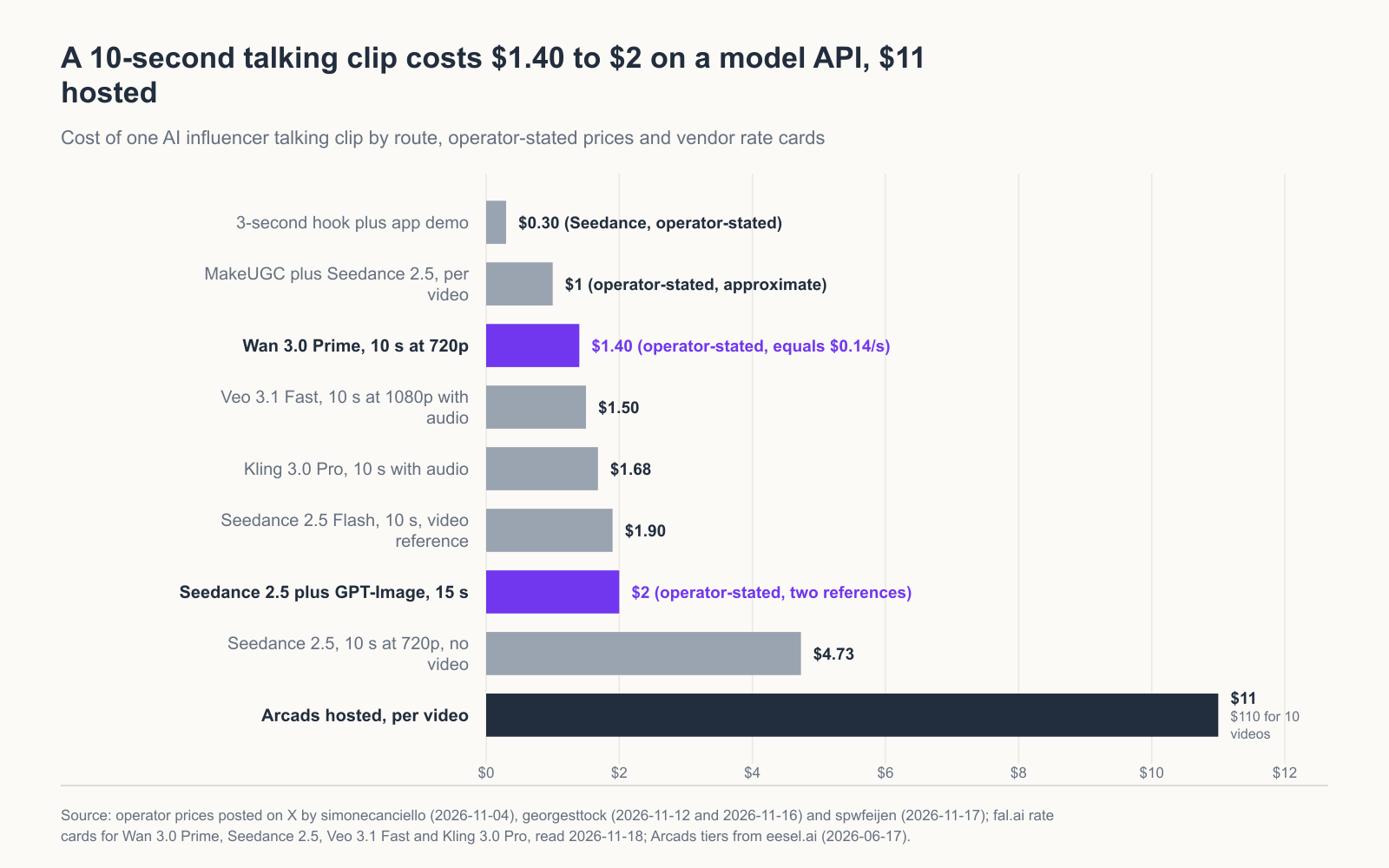
Per hour of finished video the long formats are nearly free, $1.50 to $4.50 for documentary and $3 for avatar, while ad clips cost more because the value is per clip: one operator makes 100 AI UGC videos in under an hour with Claude, MakeUGC and Seedance 2.5 at about $1 a video, which is $120 an hour of output at 30 seconds a clip.
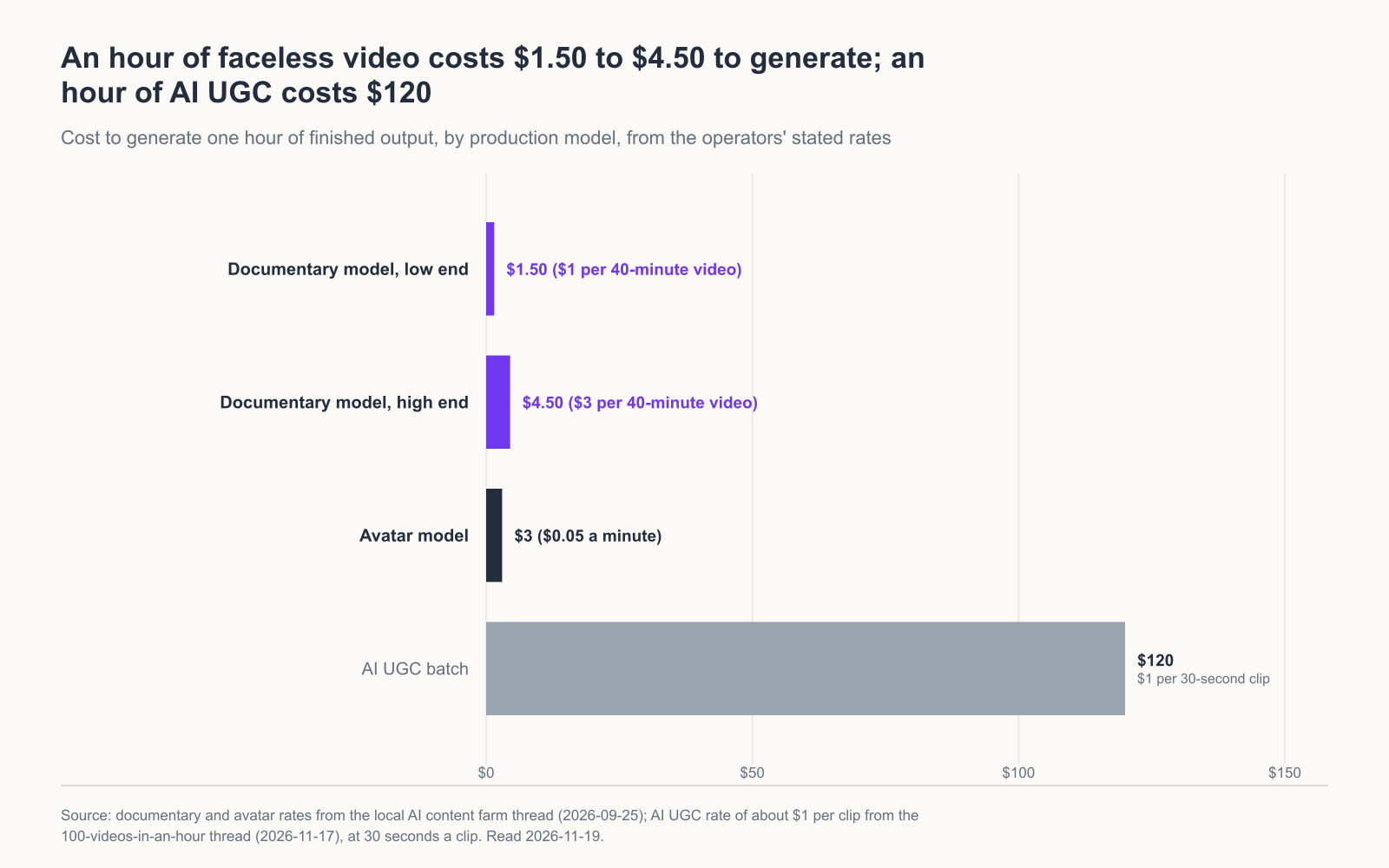
Figure 2. Cost to generate one hour of finished output, by production model, from the operators’ own rates.
How do AI content farms make money?
AI content farms make money on five lines, in rising order of size: platform ad payouts, TikTok Shop and affiliate commissions, a DM funnel to a digital product, Fanvue subscriptions, and the course sold to other would-be farmers, where the ad line is the smallest and most talked about and the course line is the largest, fed by screenshots of the other four.
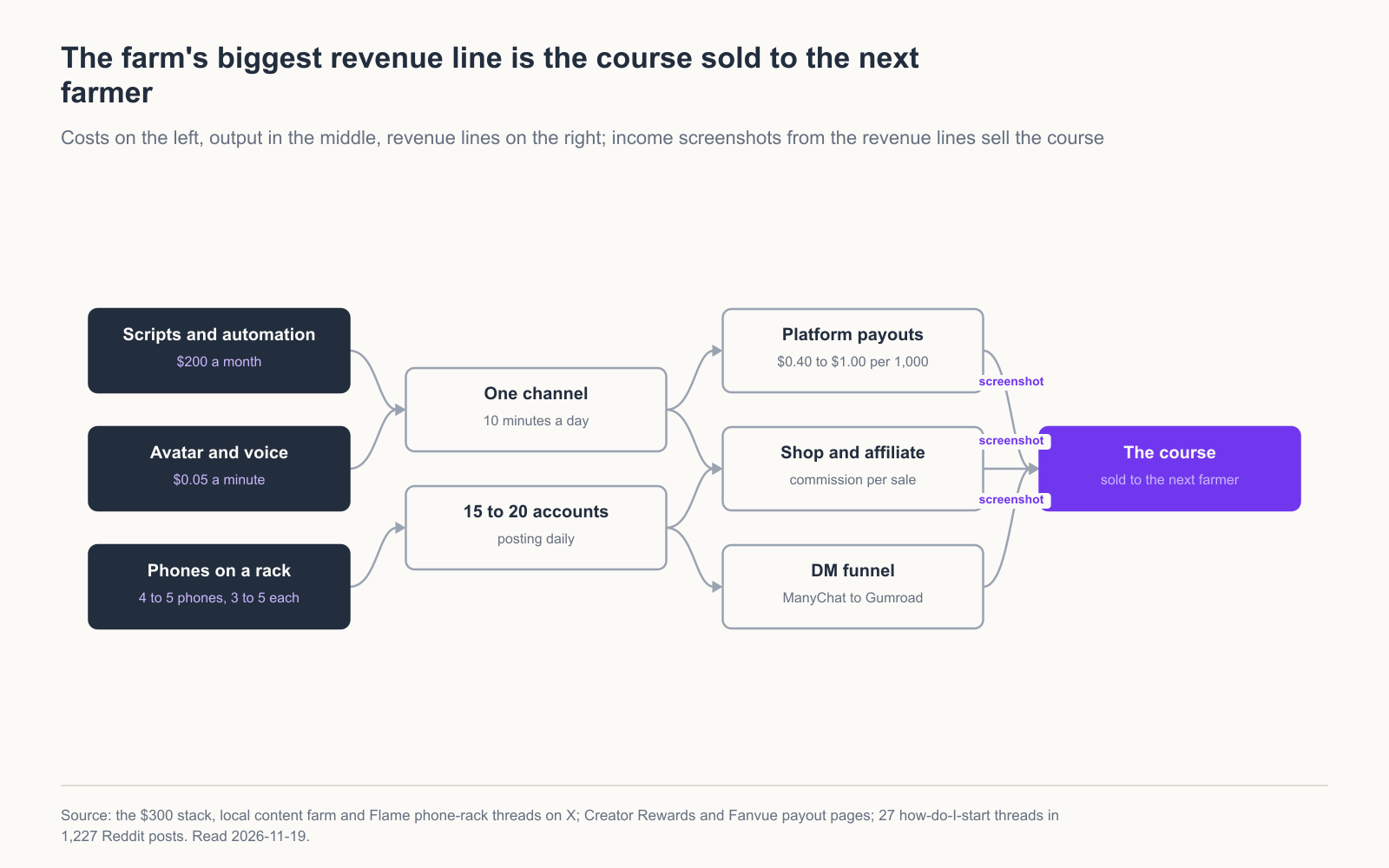
Figure 3. The farm’s money flow: costs on the left, revenue lines on the right, the course fed by screenshots of the other lines.
Ad revenue depends on niche and the viewer’s country. A 2026 RPM table built from creator disclosures puts typical US YouTube RPM at $32 for insurance, $28 for personal finance, $9 for history and documentary, $8 for true crime, $3 for gaming and $2.50 for kids content. TikTok pays far less: the Creator Rewards Program pays $0.40 to $1.00 per 1,000 qualified views, finance runs about 1.3 times that, up to about $1.20, videos under one minute earn nothing, and slide videos and copied clips are excluded. The rulebook is in does AI content get demonetized.
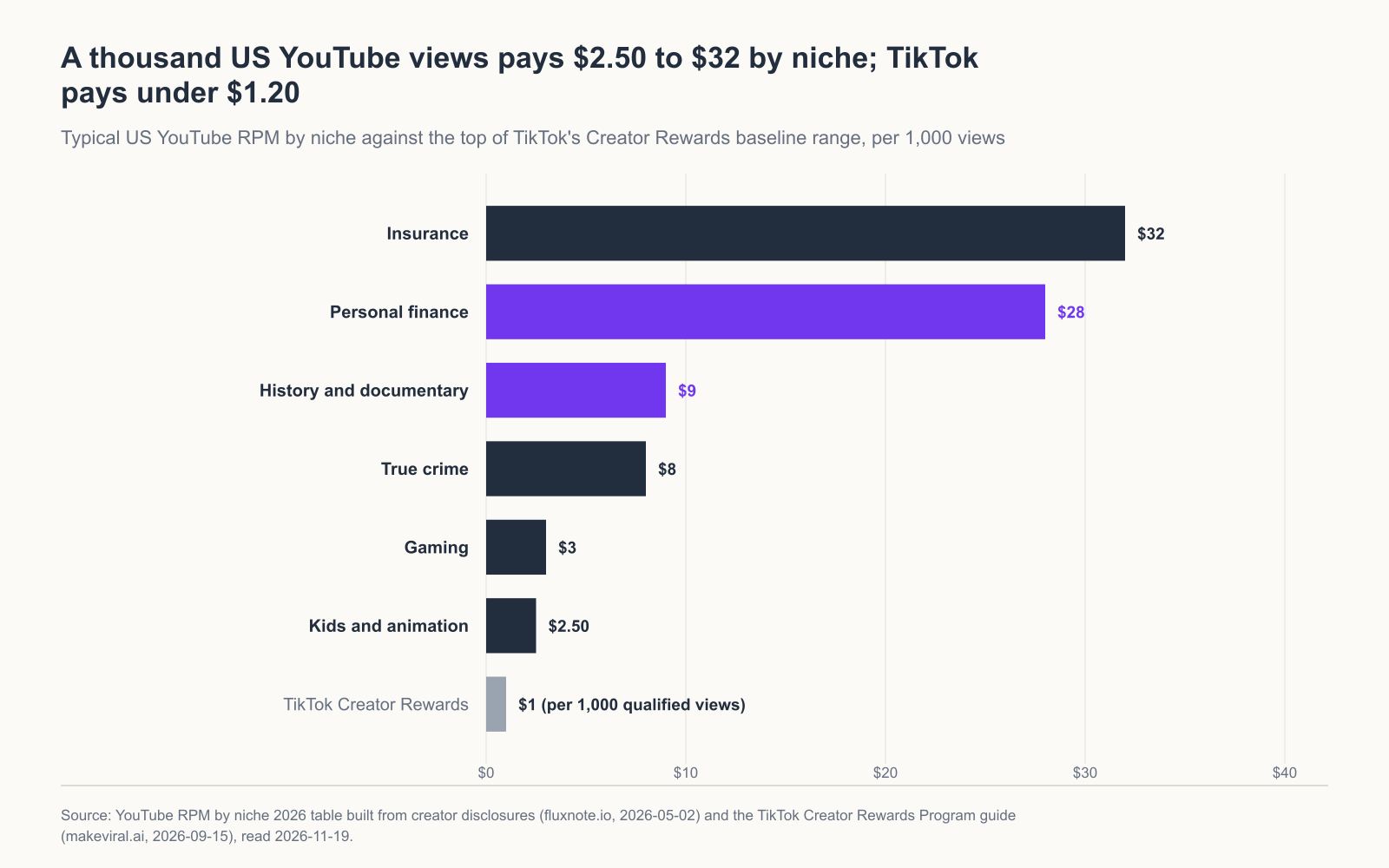
Figure 4. What a thousand views pays: typical US YouTube RPM by niche against the top of TikTok’s Creator Rewards baseline.
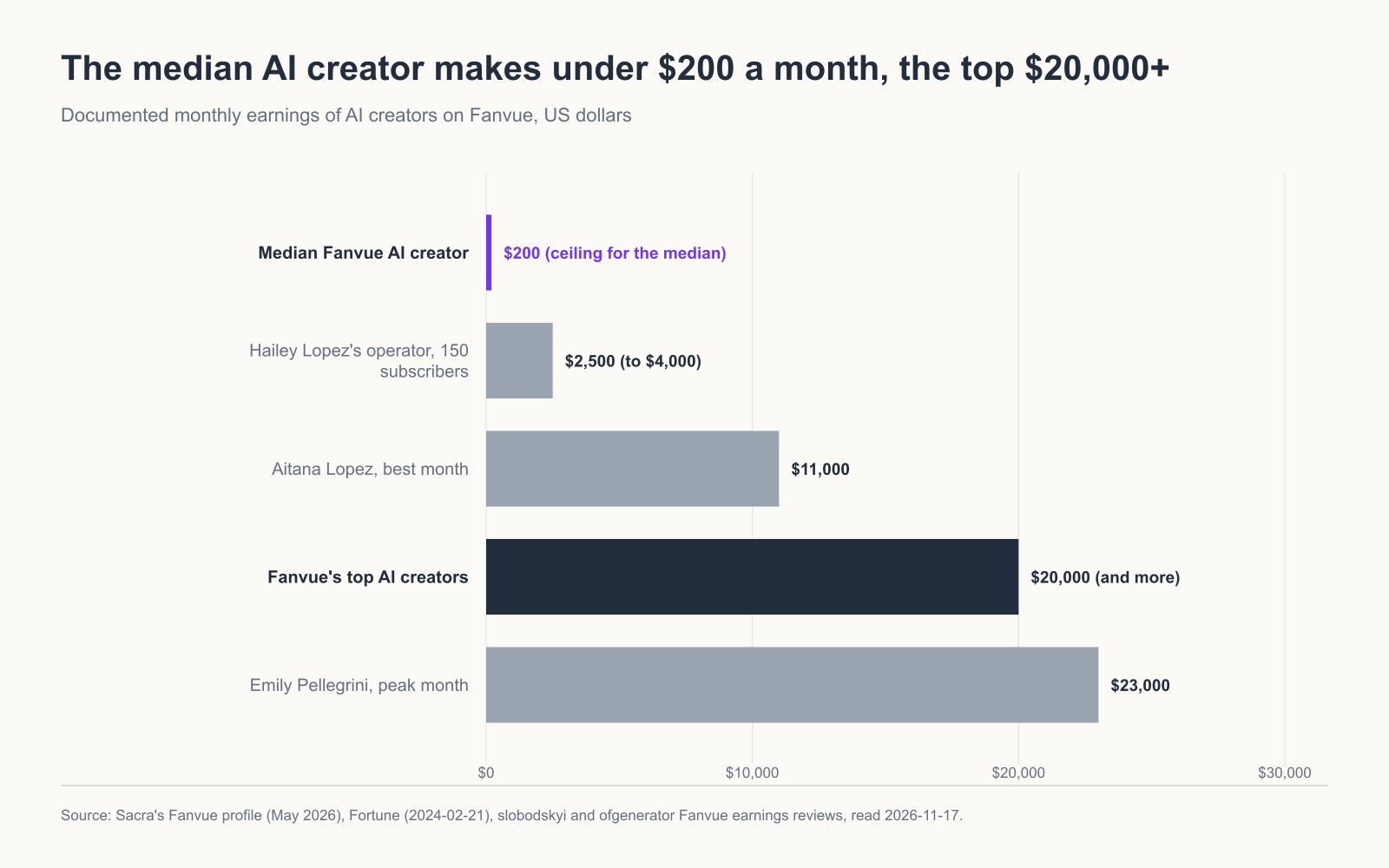
Commerce pays per sale: the supplement operations below run on TikTok Shop and Amazon affiliate links, and the $15 ManyChat line replies to “comment X” with a Gumroad link to a PDF or a course. Fanvue pays creators 80%, and AI creators are about 15% of its revenue, with top AI accounts at $20,000 or more a month. The six paths are in how AI influencers make money.
The largest line sells the method. The most bookmarked faceless-YouTube post in the 480 X posts is a list of 13 faceless AI niches, 1,252 bookmarks on 44,350 views. The $20,000-a-month faceless training is “normally reserved for our paid students”: “like + comment yt and I’ll send you the link”. The 12-day-old channel on track for $4,000 is a story about a system a student then copied.
The buyers are on the other side. In the 1,227 Reddit posts we pulled from the last 30 days, 27 are people asking how to start a faceless channel or clipping: 14 about faceless channels, 13 about clipping, and 8 of the 27 posted from the Philippines or India. A NewTubers thread asks which courses are worth it. An Indian banker asks three subs: finance or poetry, long or shorts, Instagram or YouTube.
Brands run the same machine without the course. A faceless account program posts three to five times a day on accounts the brand owns, selling the brand’s product. A face-of-brand character is the avatar line with disclosure on and a brand behind it.
What does a real AI content farm look like?
A real AI content farm looks like one of the three operations that got large enough to leave a record: a TikTok Shop supplement network of AI doctors that ended in an FDA recall and a lawsuit, a network of 41 AI fitness grandparents selling supplements to Facebook’s oldest users, and the AI history and nostalgia channels that boomed on YouTube and then met the January purge.
| Case | Platform | What the video sold | Tools named | What happened |
|---|---|---|---|---|
| Rosabella’s AI doctors | TikTok Shop | Beetroot and moringa supplements | Veo 3, HeyGen, ElevenLabs, CapCut | FDA salmonella recall, Humann lawsuit, February 2026 |
| 41 fit-grandma accounts | Facebook, Instagram | Supplements, a course, Amazon affiliate links | AI avatars aged 60 to 80 | Documented by Ask Grammy, October 30, 2026 |
| AI history and nostalgia channels | YouTube | AdSense | Script model, cloned narration, stock visuals | 16 channels terminated, January 2026 |
404 Media traced creators generating fake doctors with Google’s Veo 3, HeyGen and ElevenLabs, cutting them in CapCut and posting them to TikTok Shop to sell Rosabella supplements. One AI doctor video reached 1.3 million views, and a recruitment video claimed over $400,000 paid to creators in a month. Then the FDA recalled Rosabella moringa for salmonella in February 2026, and rival Humann sued Ambrosia Brands, the company behind Rosabella, for directing hundreds of AI-doctor videos and ads.
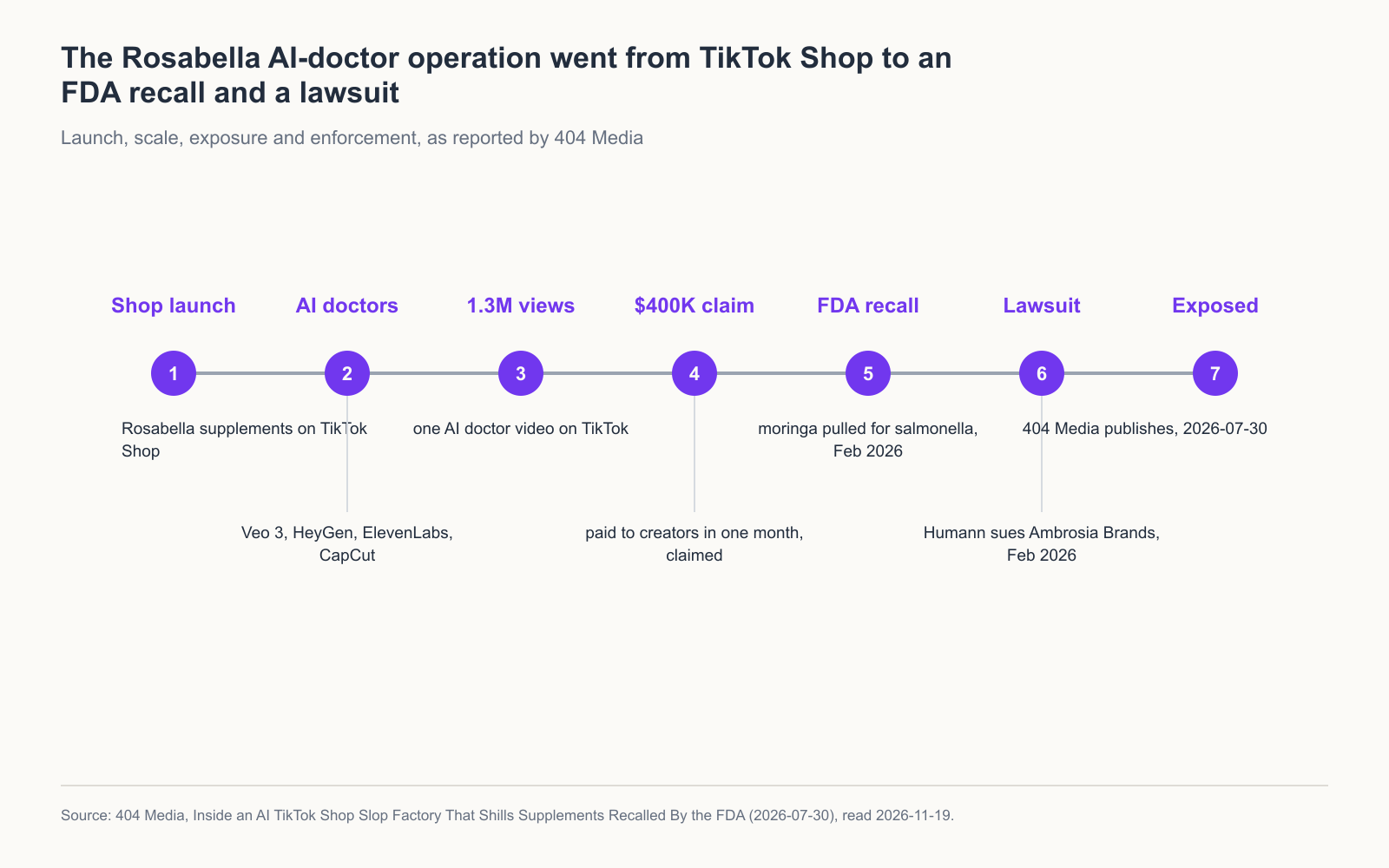
Figure 5. The Rosabella operation from launch to lawsuit, as reported by 404 Media.
The fit-grandma network is the avatar line aimed at a demographic. Ask Grammy documented 41 AI fitness influencer accounts created between March and October 2026 with about 1.5 million combined followers. 39 of the 41 built their audiences on Facebook, the platform older adults use most, with avatars in their 60s to 80s selling supplements, a course and Amazon affiliate links. It is the $300 stack with the archetype chosen for the buyer.
The history and nostalgia channels are the AdSense line at scale. A Dutch thread with 76 comments lists faceless AI nostalgia channels “shooting up like mushrooms”. The format is a cloned narrator over stock visuals, built to be slept to, in a niche paying $9 per thousand US views. In January 2026 YouTube terminated 16 channels with 35 million subscribers and 4.7 billion lifetime views, together earning an estimated $10 million a year. On November 5 an operator posted that one of his AI channels was demonetized for repetitive content and that he deserved it.
How much does a faceless channel actually earn?
A faceless channel earns far less than the course pitches say: the one itemised income report in the corpus comes from a faceless walking channel with 1,100 subscribers and sat at 100 views after a week, while the $14,276-in-90-days post has one upvote, no comments and no body text, because it sells a guide.
The walking channel’s six-month report was posted because, its author says, faceless niches have almost no income reports. The $14,276 post is a title, a link and zero engagement. The Tamil YouTube thread describes the cheapest AdSense model: react to 10 reels, post a 10-minute video, collect the payout. The r/TanongLang question, “does anyone really get rich from Whop clipping and AI faceless reels”, drew 16 comments and zero upvotes.
One creator earned $1,300 from seven videos in ten days after joining Creator Rewards. Another watched a 2.7-million-view video pay $1.73. A clipper in the Philippines made nothing in month one, $500 in month two and over $1,000 in month three, on track for close to $2,000 at one to two hours a day. The farms that post real numbers sold a product or a course.
What are the platforms doing about content farms?
The platforms are cutting mass production while allowing AI tools: YouTube renamed its repetitious content policy to inauthentic content on July 15, 2025 and terminated 16 channels under it in January 2026, Instagram stopped recommending accounts that mostly repost on April 30, 2026, and TikTok excludes slide videos, copied clips and sub-minute videos from Creator Rewards.
YouTube’s channel monetization policies name the target: “AI-generated content made with generic or unoriginal templates giving the impression of mass production” and “image slideshows, templated storylines, or scrolling text with minimal or no narrative”.
Instagram’s April 30, 2026 change stops recommending accounts that mostly repost content they did not create to non-followers, and extends the rule from Reels to photos and carousels.
TikTok’s Creator Rewards exclusions cover videos “copied from others”, “split screens, meaningless reactions” and “low-quality images, or slide videos”. TIME reported that Granny Spills reached 400,000 TikTok followers and a million on Instagram in her first weeks, at five to ten minutes of production per video, and that her videos were flagged as unoriginal and cut from Creator Rewards.
A build sheet for brands that want the machine without the farm
- Budget the stack at $300 a month and generation at $3 an hour. The cost that matters is the person who picks the format, approves the output and reads the numbers.
- Put a product behind the video, not a payout. Ads pay $2.50 to $32 per thousand US views on YouTube and $0.40 to $1.00 on TikTok. Shop, affiliate, DM and subscription lines pay per sale.
- Own the character and switch disclosure on. The fit-grandma network and Granny Spills show what an undisclosed avatar earns: a label, a Creator Rewards exclusion, a page on a scam-watch site.
- Make each account’s creative unique. YouTube’s policy names templated mass production and Instagram’s names reposting.
- Prove one format before multiplying it. Flame tested 150 pieces a day to find one hook before scaling the rack.
- Read income screenshots as sales material. The $600,000 channel, the $4,000 first month and the $14,276 in 90 days are the top of a course funnel.
This is the machine Hi Violet builds for clients, with the brand on the account instead of a course at the end. Faceless account programs run niche accounts posting three to five times a day, and face-of-brand characters give the brand a disclosed presenter on the same avatar and voice pipeline. If you want the farm’s unit economics working for a product you own, request a strategy call.
How we did it
We pulled 480 X posts from 2026-09-01 to 2026-11-19 across eight searches through Apify’s tweet scraper by apidojo, and 1,227 Reddit posts from the last 30 days across 43 searches through Apify’s Reddit scraper by harshmaur. Unit costs come from the operators’ own X posts, revenue figures from a 2026 YouTube RPM-by-niche table built from creator disclosures, a Creator Rewards guide and a Fanvue earnings page. Cases and platform rules come from 404 Media, Ask Grammy, TIME, The Next Web, YouTube’s monetization policies page and TechCrunch. We read every source on 2026-11-19, read all 1,221 unique Reddit titles ourselves, and counted 27 posts asking how to start a faceless channel or clipping.
FAQ
What does it cost to run an AI content farm?
About $300 a month in tools for a one-person operation: $200 for ChatGPT automation, $15 for an avatar generator, $15 for a DM tool and a free checkout page. Generation on top is cheap: $1 to $3 for a 40-minute documentary and $0.05 a minute for avatar video.
How do AI content farms make money?
Five lines. Ad revenue pays $2.50 to $32 per 1,000 US YouTube views by niche and $0.40 to $1.00 on TikTok. TikTok Shop and affiliate links pay a commission per sale. A DM funnel sells a digital product and Fanvue pays an 80% share on subscriptions. The course sold to the next farmer is the largest line.
How much does a faceless YouTube channel make?
The honest reports are small. A faceless walking channel with 1,100 subscribers posted its first six months of income and the video sat at 100 views. The $14,276-in-90-days post had one upvote and no body text: it sells a guide. A thousand US views pays $9 in history and $28 in personal finance.
What is an AI content farm?
A production system that turns one format into daily video across many channels: a script model, a cloned voice, generated visuals, automated assembly and scheduling. The format is the asset and each channel is a test of it. The operators’ own figure is about 10 minutes of human time a day per channel.
Is YouTube banning AI content farms?
YouTube bans mass production, not AI. In January 2026 it terminated 16 channels with 35 million subscribers and 4.7 billion views under the inauthentic content policy. Instagram stopped recommending repost accounts on April 30, 2026. TikTok cuts slide videos and copied clips from Creator Rewards.
How much does an AI UGC video cost to make?
About $1 a video in generation credits. One operator produces 100 AI UGC videos in under an hour with Claude for scripts and MakeUGC and Seedance 2.5 for footage. Per hour of finished output that is around $120, against $1.50 to $4.50 for an hour of faceless documentary and $3 for avatar video.