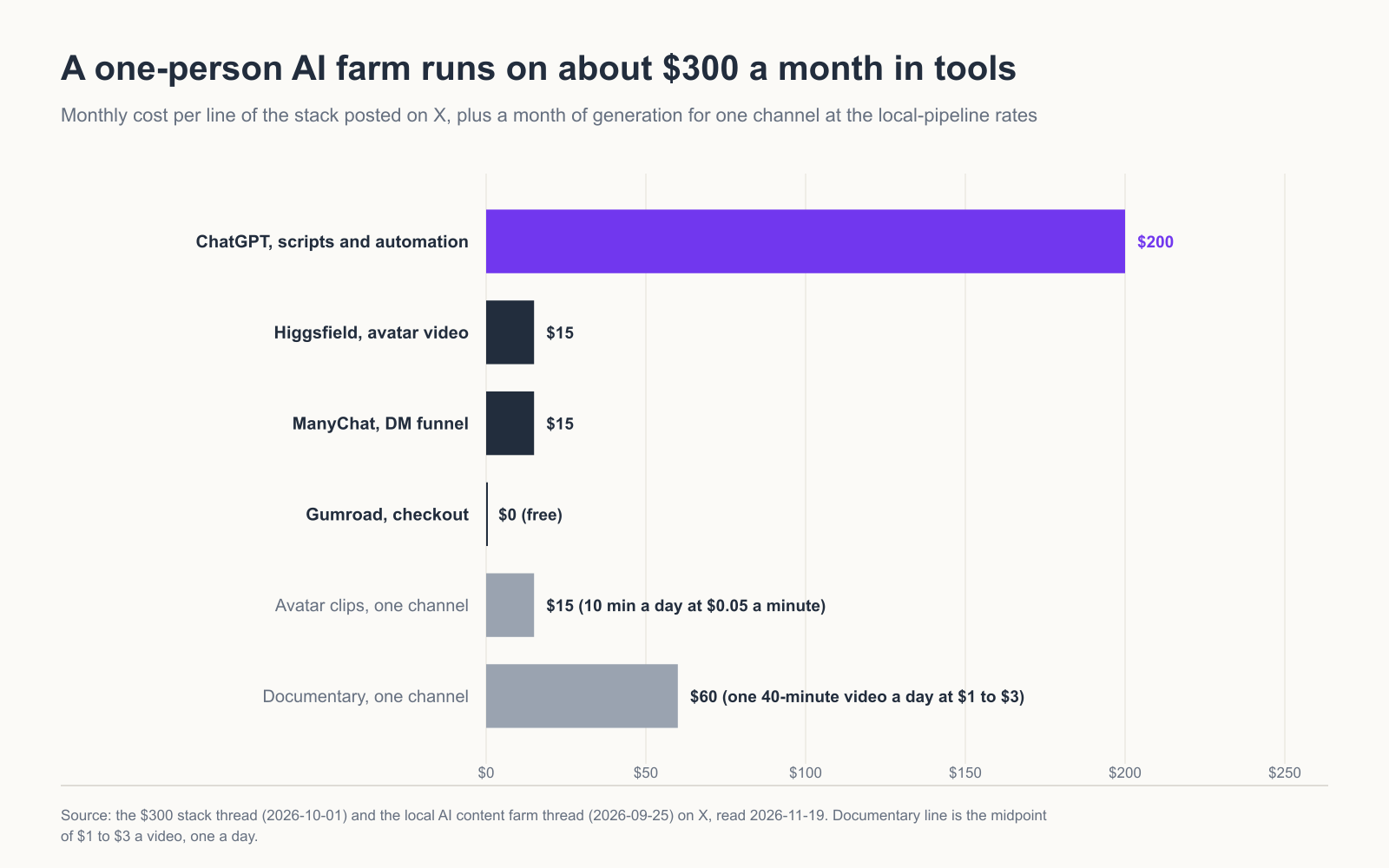
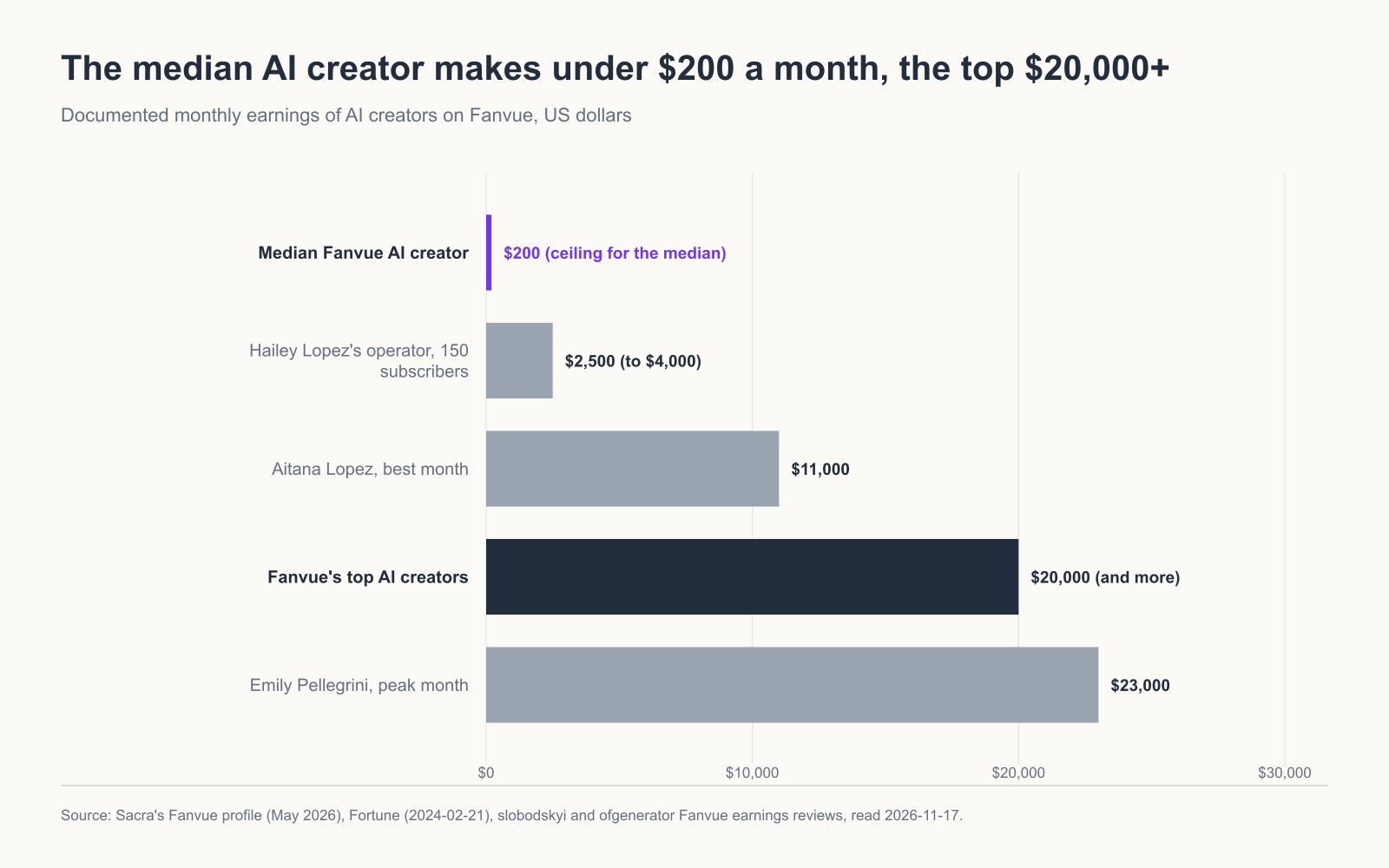
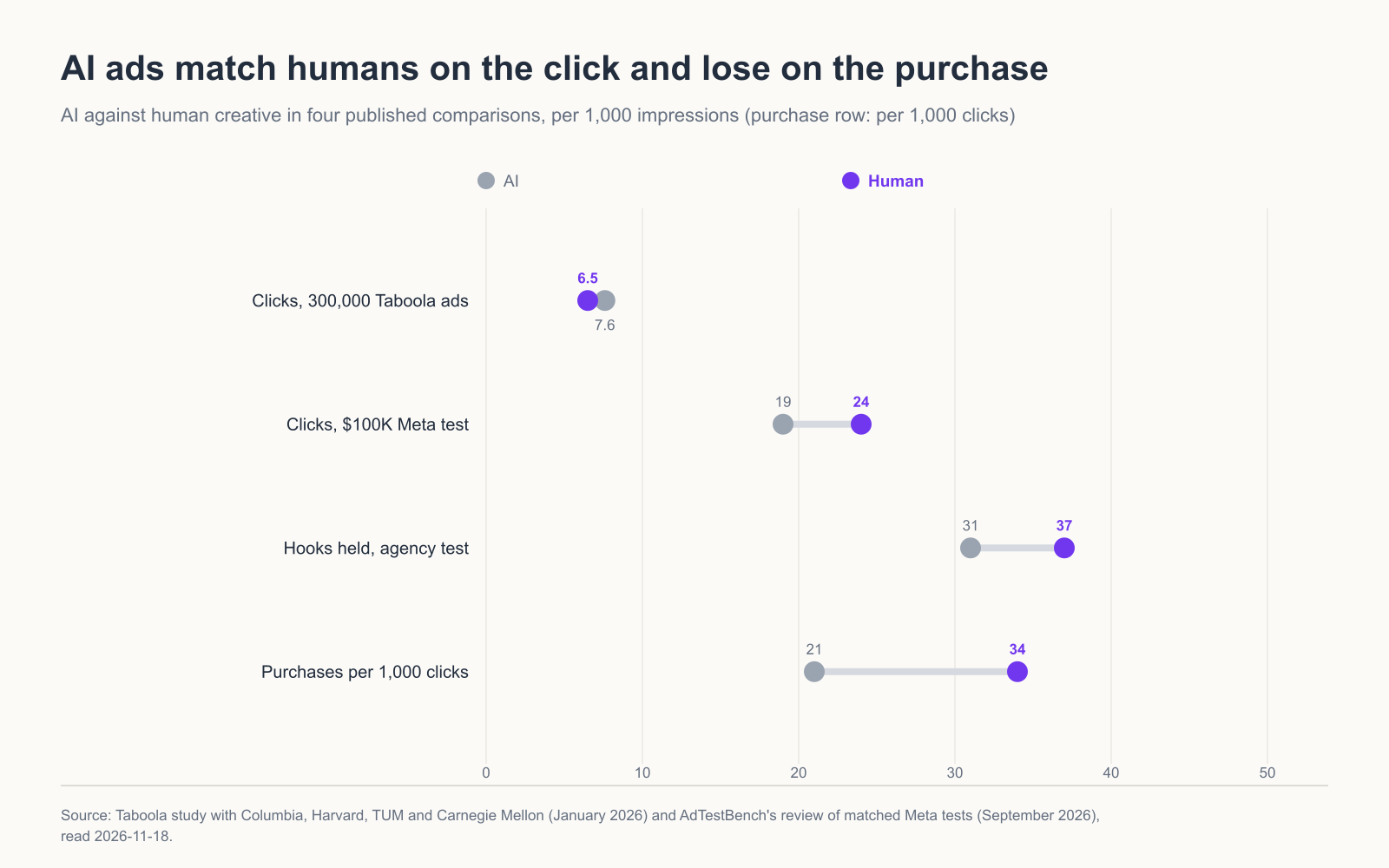
How Do AI Influencers Keep the Same Face? The $1.40 Clip Pipeline
AI influencers keep the same face by generating every still and clip against reference images of one locked character. Operators pay $1.40 to $2 per 10 to 15 second talking clip.
AI influencers keep the same face by never letting the model invent one: every still and every clip is generated against reference pictures of a character that was locked once, so the model copies a person it is shown. The operators publishing their workflows on X pay $1.40 for a 10-second talking clip on Wan 3.0 Prime and $2 for a 15-second clip on Seedance 2.5, and they approve every image before they animate anything.
In the 480 X posts we pulled, 62 mention AI influencers and 46 mention AI UGC. On Reddit, 61 of the 1,227 posts mention one or the other, and 16 of those ask how to keep the character consistent. This post is the production side of our AI influencer money study.
Key findings
- Operators keep the face consistent by attaching two or three reference images from a six-view character sheet to every clip, or by training a LoRA on 20 to 30 stills for $1.46.
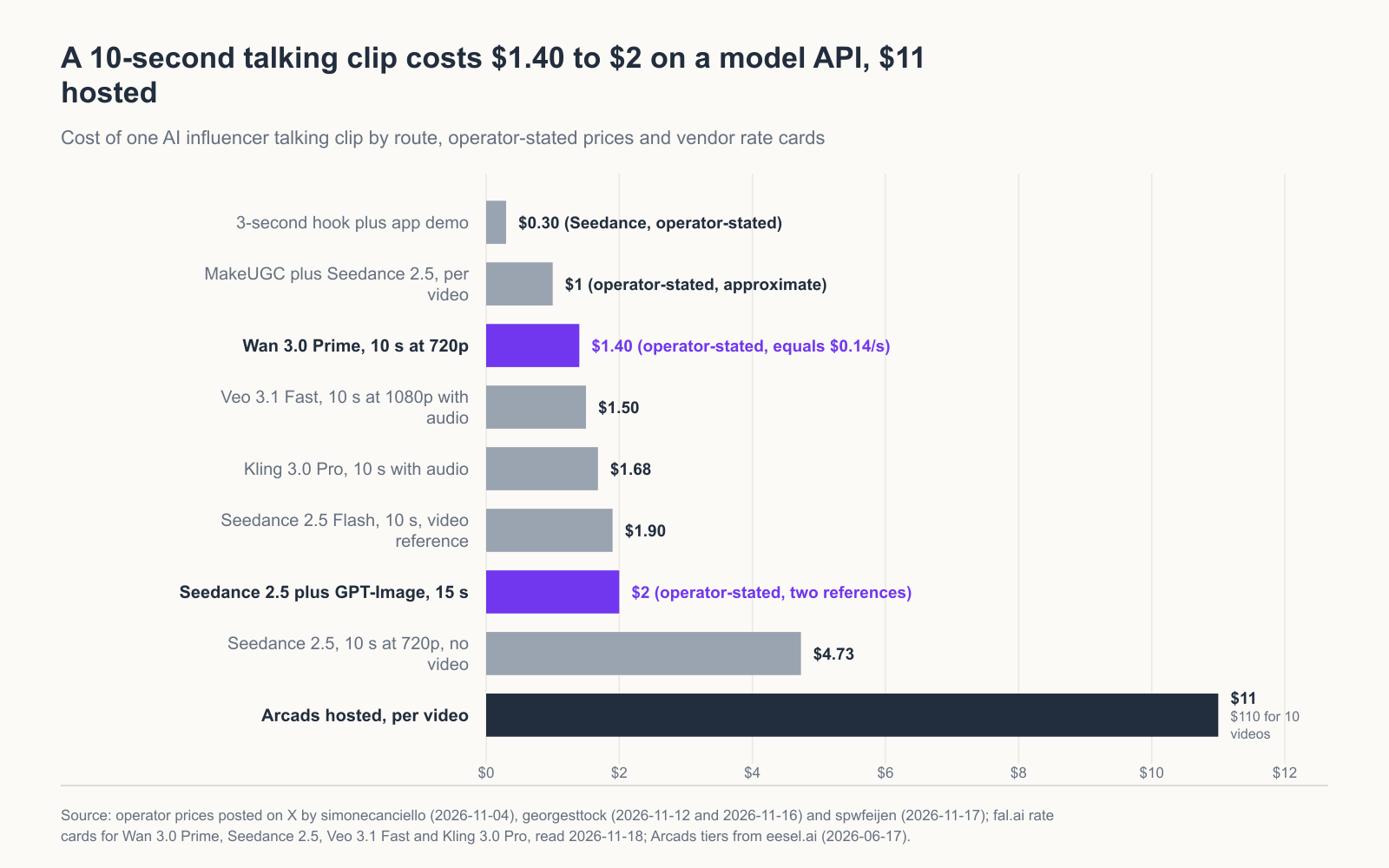
- A 10-second talking clip costs $1.40 on Wan 3.0 Prime at 720p, exactly the $0.14 per second fal.ai charges, and a 15-second clip on Seedance 2.5 with two reference images costs $2.
- A still costs $0.03 to $0.13, about 40 times less than a rejected clip, so operators approve stills before they animate.
- Wan 3.0 takes up to 10 reference images and 5 reference videos, Seedance 2.5 takes up to 30 images and 10 videos, and both generate the voice inside the clip.
- One operator reports 60 to 70% of generations usable, another reports 100 videos in under an hour at about $1 each, and a 3-second hook cut to an app demo costs $0.30.
- Hosted stacks price the same work at $11 per video (Arcads, $110 for 10) or 3.3 to 7.5 cents a credit (Higgsfield).
How do AI influencers keep the same face?
An AI influencer’s face stays the same because every image and every clip is generated against stored reference pictures of one locked character, so the model copies a person it is shown instead of sampling a new one from the prompt.
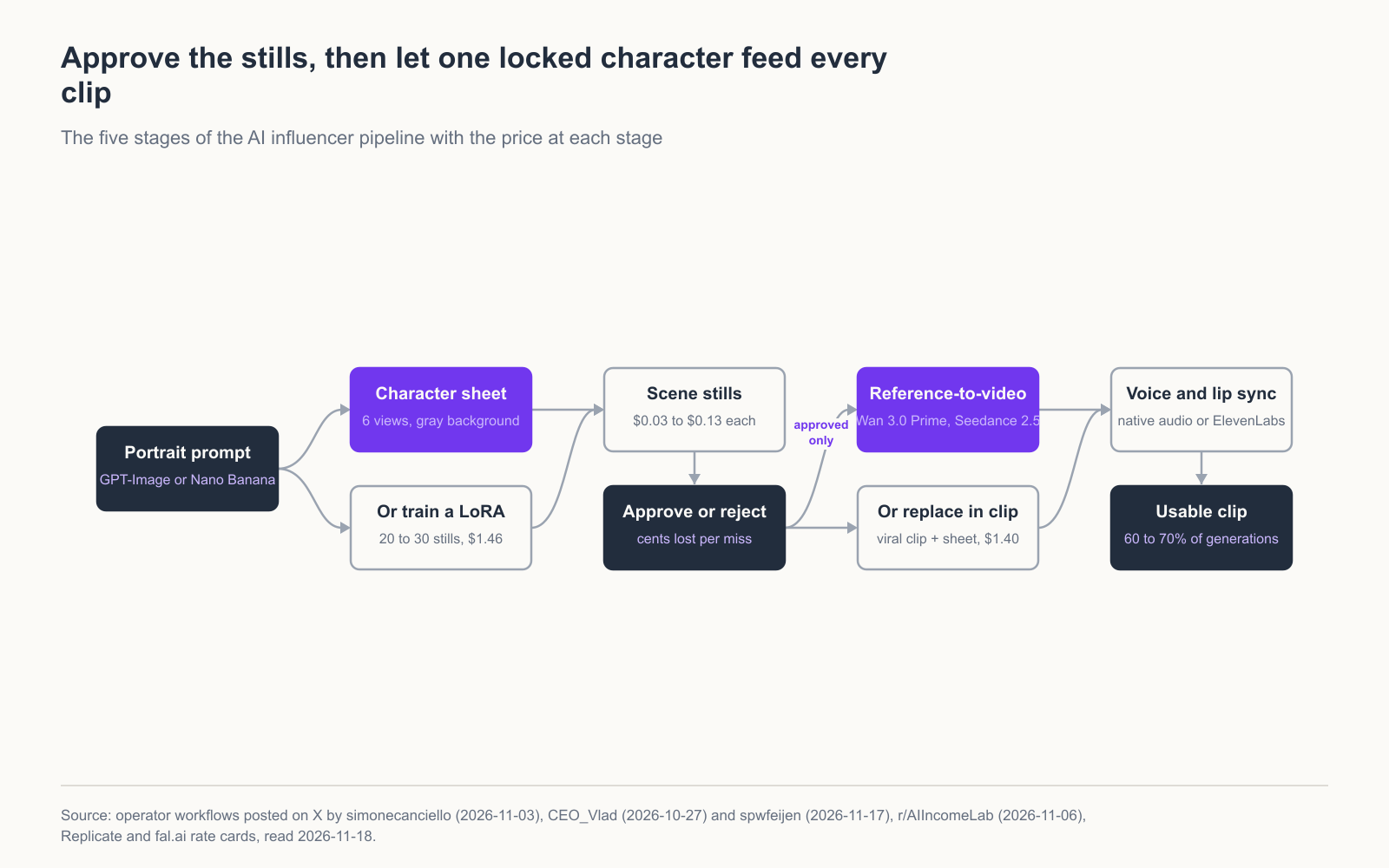
Figure 2. The five stages, priced from the operators’ posts and the vendor rate cards.
A three-month r/AIIncomeLab breakdown with 96 upvotes puts it in one line: “Consistency is the whole game. If her jawline changes between posts, people notice and trust is gone.” Its recipe is 20 to 30 reference images of one chosen face, a LoRA trained on them, and a re-run of anything that drifts. Lock the character once, then condition every generation on it.
What is a character sheet?
A character sheet is one image that shows the same person from several angles, usually six views on a plain gray background, full body front, side and back plus close-up front, side and back, generated from a single approved portrait so that every later generation has the face, hair, body and clothing to copy.
A thread with 801 likes prices the whole workflow at $2.00. Step one is a portrait in GPT-Image 2.5 from 150 words of specifics: “subtle natural freckles,” “champagne-blonde hair with darker roots,” “a beaded necklace with a round spiral pendant,” “no beauty filters, no AI look.” Step two turns the portrait into a six-view sheet with the instruction to “strictly keep 100% of face, hair, body, clothing and all details from the reference.”
More references beat one. The same operator’s later post runs Wan 3.0 Prime with three references, and George Stock’s $2 clip uses two with Seedance 2.5. Wan 3.0 accepts up to 10 reference images and Seedance 2.5 up to 30, per fal.ai’s model comparison. On open weights, Replicate’s Flux fine-tuning guide prices a LoRA at about $1.46 for 20 images and 1,000 steps.
Which tools do AI influencers use?
AI influencer operators use GPT-Image and Nano Banana for the portrait and the character sheet, Flux with a LoRA for the same job on open weights, Wan 3.0 Prime and Seedance 2.5 to turn the references into talking video with the voice built in, Veo 3.1 and Kling 3.0 to animate a single still, and ElevenLabs for voiceover on b-roll.
| Stage | Tool | Price |
|---|---|---|
| Portrait and sheet | GPT-Image 2.5 or 2.6 | $0.086 per 2048 px image, operator-billed |
| Portrait and sheet | Nano Banana 2.1, Nano Banana Pro | $0.0336 and $0.134 per 1K image |
| Portrait on open weights | Flux with a trained LoRA | $1.46 to train |
| Reference-to-video | Wan 3.0 Prime | $0.068, $0.14, $0.28 per second at 480p, 720p, 1080p |
| Reference-to-video | Seedance 2.5 | $0.2205, $0.473, $1.164 per second, less with a video input |
| Image-to-video | Veo 3.1 Fast, Kling 3.0 Pro | $0.15 and $0.168 per second with audio |
| Voice for b-roll | ElevenLabs | $6 a month for 30,000 characters |
| Hosted stack | Higgsfield | $9 for 120 credits, $29 for 600, $79 for 1,800 |
| Hosted stack | Arcads, MakeUGC | About $11 per video, or $29 to $79 a month |
Prices are from fal.ai’s model pages, Google’s AI Studio pricing, ElevenLabs, MakeUGC, an October 2026 Higgsfield price breakdown and eesel’s Arcads report, read 2026-11-18.
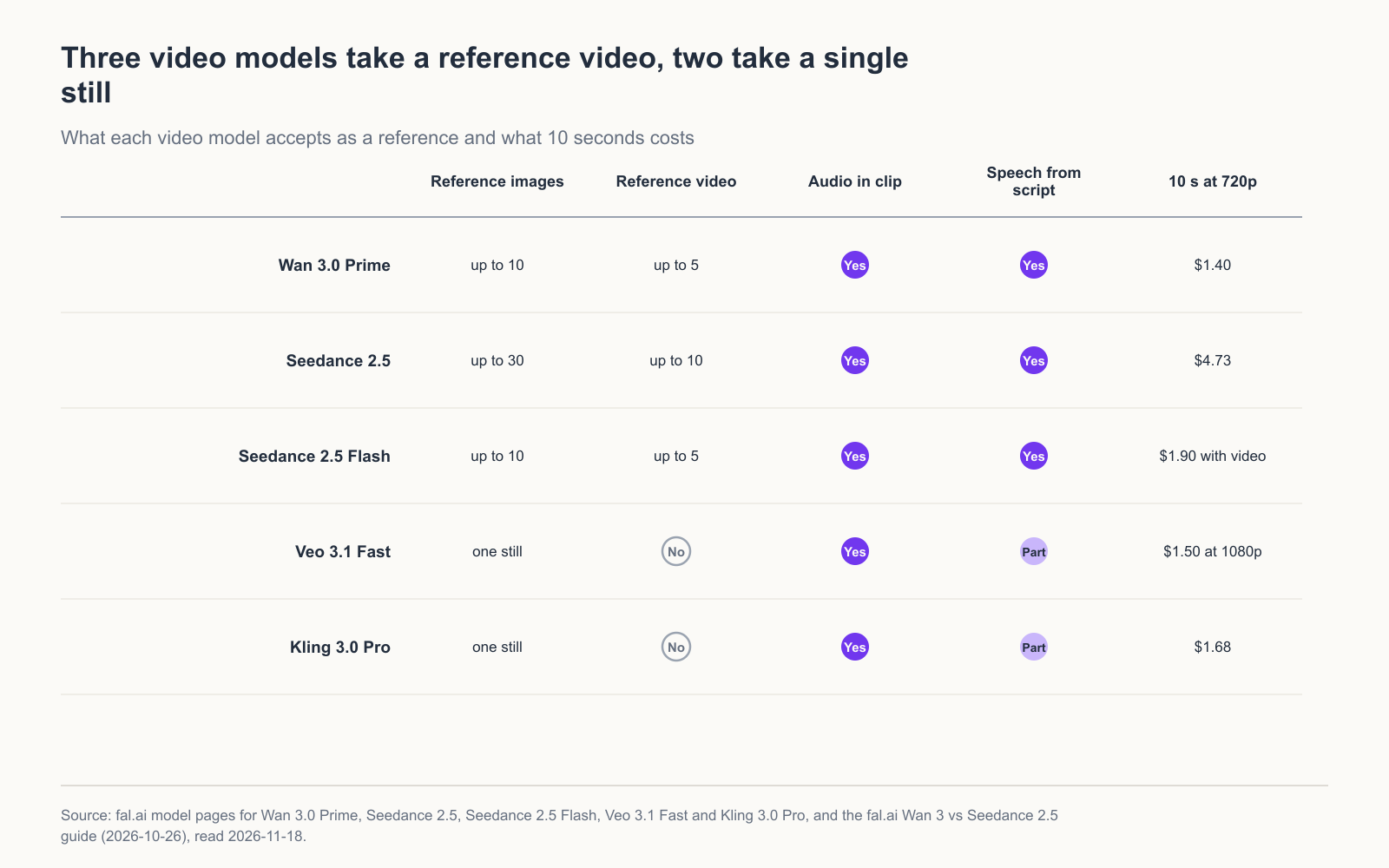
Figure 4. What each video model accepts as a reference and what 10 seconds costs.
The split that matters is reference video. Wan 3.0 accepts up to 5 reference videos and Seedance 2.5 up to 10, so both can take a finished clip plus the character sheet and rebuild it around the new person. Veo 3.1 Fast and Kling 3.0 Pro animate one still at $1.50 (at 1080p) and $1.68 for 10 seconds with audio. It is a production line, which is why we run it as one for clients who want a brand-owned presenter rather than a stack of subscriptions.
Why do the clothes and hands change?
An AI influencer’s clothes and hands change between posts because the identity a model holds from a reference is mostly the face: the eyes, nose, mouth, hair and skin a human uses to recognise a person, while the outfit, jewelry, hands and background are re-sampled on every generation unless the prompt or a reference pins them down.
The most upvoted AI influencer question in r/comfyui this month, 302 upvotes and 81 comments, is “How can they change her clothes like a cosplay?” A six-scene test in r/ArtificialInteligence found GPT Image 2.6 held the beauty mark and freckles in all six scenes at $0.086 per image, while Seedream 5.5 let the face shape shift at $0.028.
The first fix is to describe the loose variables as tightly as the face. A prompt template in r/AIContentAutomators writes “clothing head to toe” into the CHARACTER line and closes with “@img1’s face must match the reference exactly.”
The bigger fix is to stop generating the hands at all. The replace-the-person workflow takes a finished video and swaps only the human in it. The $1.40 version prompts Wan 3.0 Prime: “Replace the girl in {video} with the girl in {character sheet}. Keep the same movements, camera quality, voice tone, background sounds, and hand gestures.” The source clip supplies the hands, the camera and the room, so the model only has to hold the face. The clip it rebuilt had 3.5 million views.
Why do AI UGC videos look real?
AI UGC videos look real because the operators prompt in the defects a phone camera produces, handheld shake, an autofocus hunt, room tone, a stumble left in the read, real-time speed with no slow motion, and a face whose age matches the claim, so the viewer’s authenticity cues fire before the face is examined.
The most liked explainer in the X corpus, 1,022 likes and 135,000 views: “nobody explains how these AI UGC ads get this realistic, they just say ‘what tool’. one prompt does all of it. the shake, the autofocus hunt, the voice, the tired face.” A second, 312 likes, ran a prompt of 863 words through Google’s Flow. None of those words are about the face. They are about the camera and the room.
One ads operator’s folder tree, 692 likes, files the same cues: “Room Tone Match,” “Stumbles Left In,” “Problem in Line 1,” “Under 85 Words,” “Age Matched to the Claim,” “Library of 5 Faces.” A 55-year-old face selling a 55-year-old’s product is a trust cue, and a 22-year-old face selling it is a tell.
One operator prices a clip at $0.30 by generating only a 3-second reaction and cutting to an app demo, because “the hook needs to look real. The demo does the selling.” Whether those clips convert is the question our Meta Ad Library study answers.
What does one AI influencer clip cost?
One AI influencer clip, a usable 10 to 15 second talking clip, costs $1 to $2 when it is generated from a model API, $1.40 on Wan 3.0 Prime at 720p and $2 on Seedance 2.5 with two reference images, while the stills that lock the face cost $0.03 to $0.13 and a hosted tool like Arcads charges about $11 per video.
Figure 1. Cost of one talking clip by route, from operator prices and vendor rate cards.
The $1.40 clip is 10 seconds at Wan 3.0 Prime’s 720p rate of $0.14 per second on fal.ai. Seedance 2.5 Flash with a video input is $0.1901 per second, $1.90 for 10 seconds, and full Seedance 2.5 without a video reference is $0.473 per second, $4.73, so operators feed it a video and George Stock’s 15-second clip lands at $2. One operator running MakeUGC and Seedance 2.5 reports about $1 per video and 100 videos in under an hour.
Those are prices per generation, not per usable clip. The ads operator’s Generation folder says “1 Generation per Ad” and “60-70% Usable.” At 65% usable, a $1.40 generation is a $2.15 usable clip.
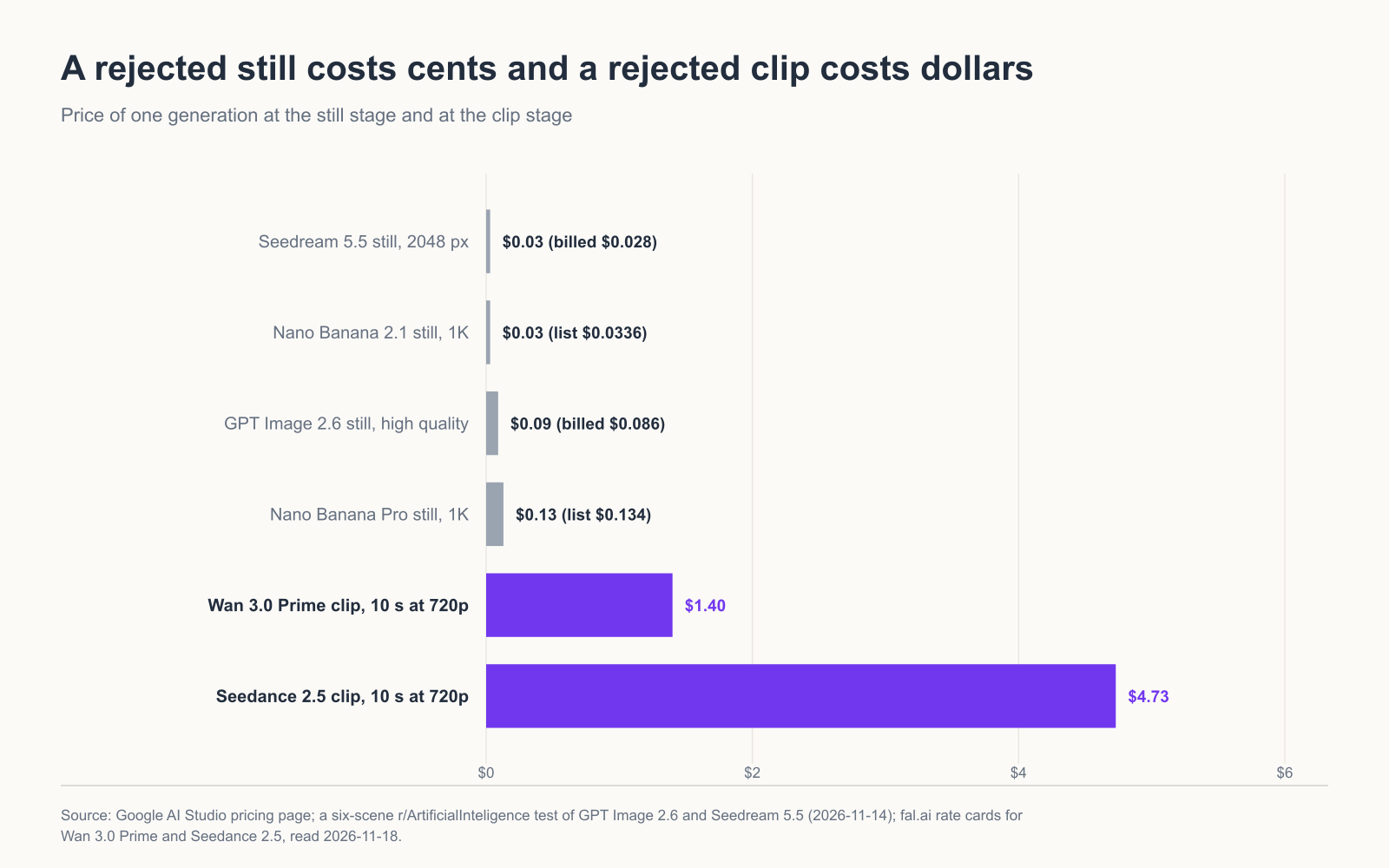
Figure 3. Price of one generation at the still stage and at the clip stage.
The rule, from the same operator: “approve all your images before animating anything. A failed image costs a few cents. A failed video costs dollars.” Nano Banana 2.1 bills $0.0336 for a 1K image ($0.03), GPT Image 2.6 at high quality billed $0.086 ($0.09), Nano Banana Pro is $0.134 ($0.13) and Seedream 5.5 is $0.028. A rejected still costs 40 to 50 times less than a rejected Wan clip.
At $1 to $2 a clip, a day’s posting on a faceless account program that ships three to five videos costs under $10 to produce. For a brand that wants one recognisable presenter, the same arithmetic is why we build the character once and run it as a face of the brand instead of regenerating a stranger per post.
A character pipeline checklist for brands
- Write the portrait prompt like a casting brief. Age, eye shape, hair and roots, one piece of jewelry, one room, and a face whose age matches the claim.
- Generate the character sheet before anything else. Six views on gray, then two or three references on every clip.
- Approve stills before you animate. A rejected still is 3 to 13 cents. A rejected clip is $1.40 to $4.73.
- Describe the loose variables as tightly as the face. Clothing head to toe, props with size and color, and if the outfit keeps drifting, replace the person inside a finished video.
- Prompt the camera, not the beauty. Shake, autofocus hunt, real-time speed, room tone, no music, and a script under 85 words.
- Price per usable clip, not per generation. At 60 to 70% usable, multiply the rate card by 1.5, and keep a library of five faces.
This production line is how Hi Violet builds and runs brand-owned characters for AI, gaming and Web3 companies, and it feeds our faceless account programs when a brand wants volume without a presenter. If you want a character built and running on accounts you own, request a strategy call.
How we did it
We pulled 480 X posts from 2026-09-01 to 2026-11-18 across eight searches through Apify’s tweet scraper by apidojo, and 1,227 Reddit posts from the last 30 days across 43 searches through Apify’s Reddit scraper by harshmaur. We counted the posts naming AI influencers, AI UGC, consistency and each tool, and quoted the prices and prompts operators stated. We read the fal.ai, Google AI Studio, ElevenLabs, MakeUGC and Replicate pricing pages and third-party price reports for Higgsfield and Arcads on 2026-11-18, and checked every operator-stated price against the vendor’s rate card.
FAQ
How do AI influencers keep the same face?
Every image and clip is generated against reference pictures of one locked character, so the model copies a person instead of inventing one. A 10-second clip on Wan 3.0 Prime costs $1.40.
What is a character sheet?
One image of the same person from six views on a plain gray background, made from one approved portrait. Operators attach two or three references per clip, or train a LoRA on 20 to 30 stills for $1.46.
Why do the clothes change on an AI influencer?
The identity a model holds from a reference is the face, not the outfit, so clothing and hands are re-sampled every generation. Operators write clothing head to toe into the prompt or replace the person inside an existing video for $1.40.
How much does it cost to make an AI influencer video?
A 10-second talking clip costs $1.40 on Wan 3.0 Prime, a 15-second clip on Seedance 2.5 costs $2, and a 3-second hook costs $0.30. Stills cost $0.03 to $0.13. At 65% usable, a $1.40 generation is a $2.15 usable clip. Arcads is about $11.
How do you make AI UGC look real?
Prompt the defects a phone produces: handheld shake, an autofocus hunt, room tone, a stumble left in, real-time speed, and a face whose age matches the claim. One operator’s prompt runs 863 words. Scripts stay under 85 words.
Which AI video model is best for a consistent character?
Wan 3.0 Prime and Seedance 2.5, because both take reference images and videos and generate the voice inside the clip. Wan accepts up to 10 images and 5 videos at $0.14 per second at 720p. Seedance 2.5 takes up to 30 images and 10 videos, and its Flash tier with a video input is $0.19 per second.
How do you train a LoRA for an AI influencer?
Collect 20 to 30 stills of one approved face, train Flux on them, and re-run anything that drifts. Replicate prices the training at about $1.46 for 20 images and 1,000 steps. Operators who skip the LoRA attach two or three reference images from a six-view character sheet to every generation instead.