Why Do TikTok Slideshows Get More Views Than Videos? 6.2x and $0
Photo mode is its own post type and a swipe counts as engagement. On matched accounts, slideshows averaged 58,000 views a post against 9,400 for video, and earned $0 from TikTok.
TikTok slideshows get more views than videos because TikTok ranks photo mode as its own post type, where every swipe counts as engagement and a post takes minutes rather than hours to make. In the one published head-to-head test on matched accounts, photo posts averaged 58,000 views each against 9,400 for video, 6.2x. TikTok’s own pitch to creators puts photo posts at 1.9x the likes and 2.9x the comments of video.
The catch is the pay. Photo mode is excluded from the Creator Rewards Program, so a slideshow with five million views earns $0 from TikTok, which is why app marketers and TikTok Shop sellers own the format. 78 of the 480 X posts we pulled about content farming mention slideshows, carousels or photo mode, and four of the 1,227 Reddit threads are brands hiring slideshow creators.
Key findings
- On matched accounts over 90 days, photo mode averaged 58,000 views a post against 9,400 for video, 6.2x, with a save rate of 5.7% against 0.7%.
- TikTok’s own message to creators says photo posts get 1.9x the likes, 2.9x the comments and 2.6x the shares of video posts.
- Across the whole platform the order flips: in Metricool’s 2,314,756-post study, video drew 5x the reach of images and carousels.
- The TikTok Creator Rewards Program pays only for original videos one minute or longer and excludes Photo Mode, so a 5 million view slideshow earns $0.
- A 2-slide slideshow with 1M+ views took one app from $1,000 to $5,000 a month in seven days, and its operator makes 50 variants of a format because 90% die.
- TikTok flags a newer upload at an 85% similarity score with an existing one and caps its distribution, so slideshow farms use unique images on every account.
What is a TikTok slideshow?
A TikTok slideshow is a photo mode post of up to 35 still images set to one sound, which the viewer swipes through by hand or lets auto-play, and which TikTok distributes on the For You feed as its own post type rather than as a video.
TikTok’s help page says you can add up to 35 photos to a post. Each image is 1080 by 1920 pixels and up to 20MB. Operators say slideshow or carousel. TikTok says Photo Mode in its Creator Rewards terms, and that is the name the exclusion uses.
In 2024 Modern Retail reported that TikTok messaged creators that carousel posts get 2.9x more comments, 1.9x more likes and 2.6x more shares on average than video posts.
Why do slideshows get more reach?
Slideshows get more reach for four reasons that compound: a swipe is an active engagement signal that TikTok weights above passive watch time, the looping sound holds the viewer on the post, a slideshow takes about 30 minutes to make against 65 for a video so volume is higher, and TikTok itself promotes the format to creators.
The swipe is the big one, because each tap is an action TikTok can count. Reelbase’s photo mode ranking explainer puts photo mode completion at about 80% against 20% for a typical video, and sets 70% swipe-through from slide one to slide two as the target a post needs to travel.
Production cost sets the volume: a video took 65 minutes and a slideshow 30 in the matched-account test, and Reelflood’s carousel against video comparison prices an auto-generated carousel at about $0.48 against $3 to $5 for an AI UGC video.
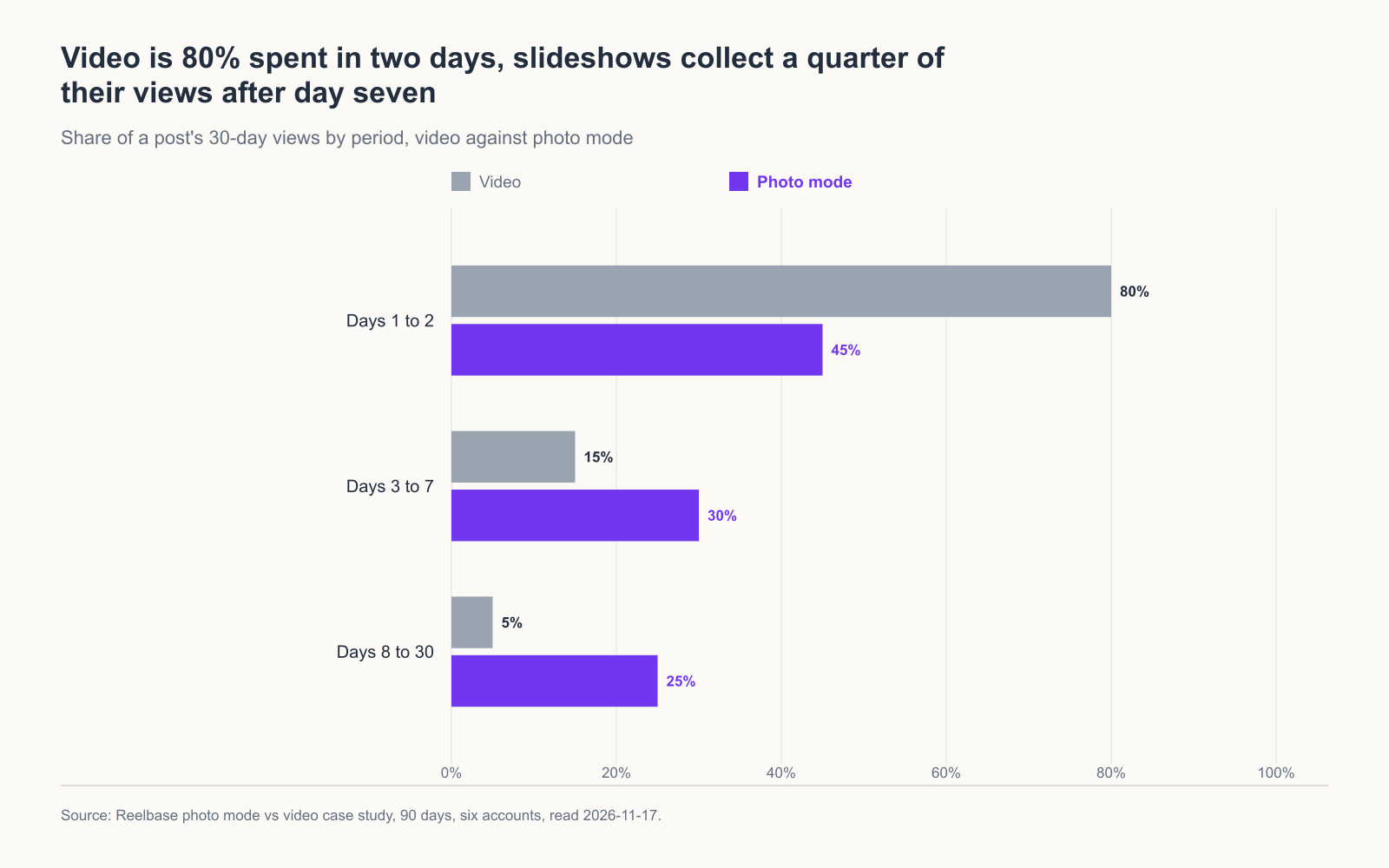
Figure 1. Share of a post’s 30-day views by period, video against photo mode, from the 90-day matched-account test.
A video in the test collected 80% of its 30-day views in two days, 15% in days three to seven and 5% after that. A slideshow collected 45%, 30% and 25%, so a quarter of its views arrive after day seven.
How much more do slideshows get than videos?
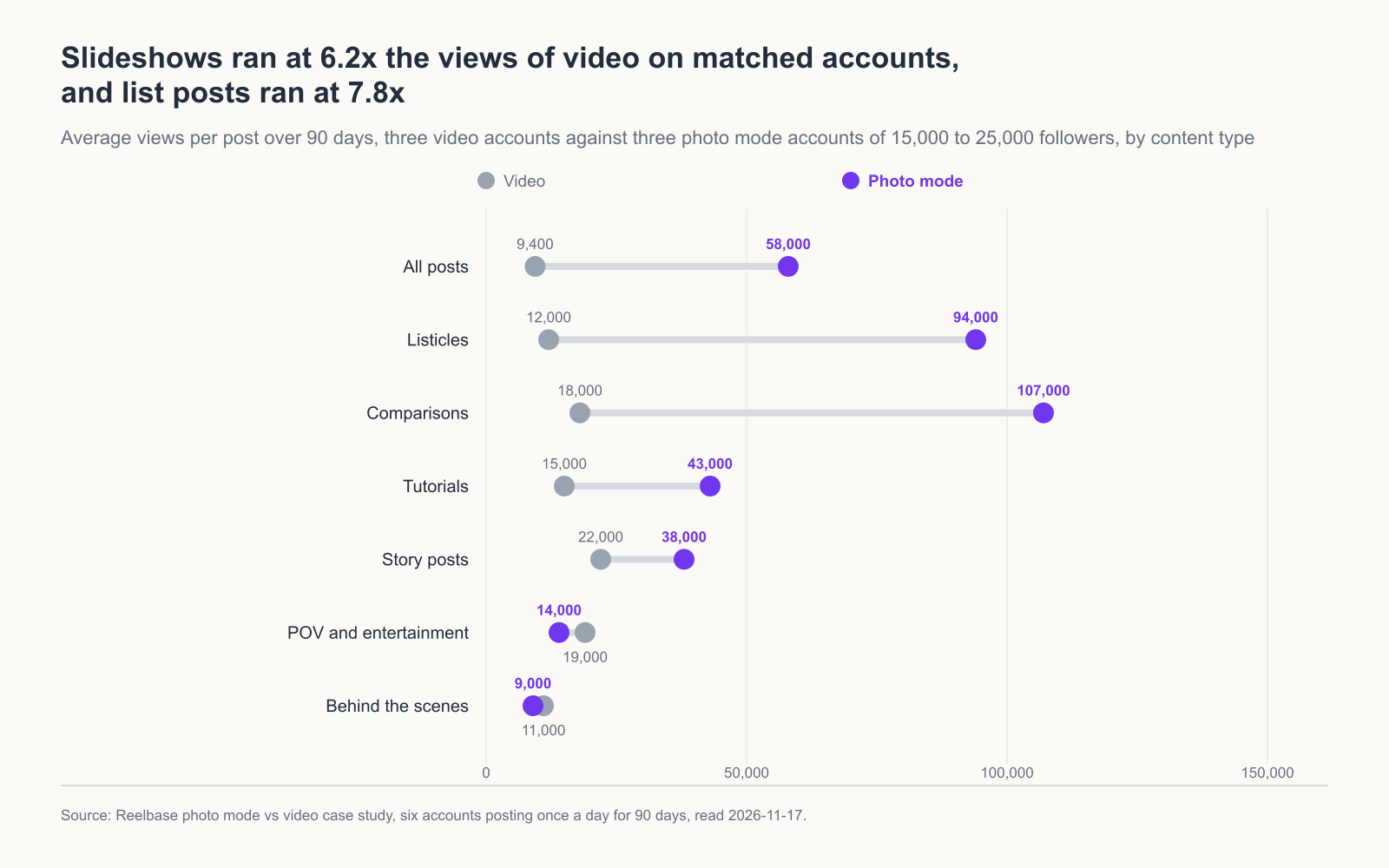
Within the same account, slideshows get 6.2x the views of video: matched accounts posting once a day for 90 days averaged 58,000 views a photo post against 9,400 a video, while platform-wide studies that average every account together put video ahead, because they count millions of low-effort photo dumps against the hits.
The within-account number comes from Reelbase’s 90-day case study: six accounts of 15,000 to 25,000 followers, three posting video and three posting photo mode, one post a day. The video group collected 842,000 views and the photo group 5.2 million, with a 5.7% save rate against 0.7%. List posts ran at 7.8x (94,000 views against 12,000), comparisons at 5.9x, tutorials at 2.9x and story posts at 1.7x. Two formats lost as slideshows: POV entertainment ran 14,000 against 19,000 and behind-the-scenes 9,000 against 11,000.
Figure 2. Average views per post over 90 days, video accounts against photo mode accounts, by content type.
The platform-wide studies average every account at once.
| Study | Sample | What it compares | Photo mode against video |
|---|---|---|---|
| Reelbase case study, 2026 | 6 matched accounts, 90 days | Views per post | 6.2x |
| TikTok message to creators, 2024 | TikTok’s own data | Comments, shares, likes | 2.9x, 2.6x, 1.9x |
| Fanpage Karma, 2025 | ~700,000 posts | Likes, engagement rate, reach, shares | 1.8x, 1.8x, 1x, 0.7x |
| Buffer, 2026 | 45M posts across platforms | Median engagement rate | 0.6x |
| Metricool, 2026 | 2,314,756 posts, 92,000 accounts | Reach per post | 0.2x |
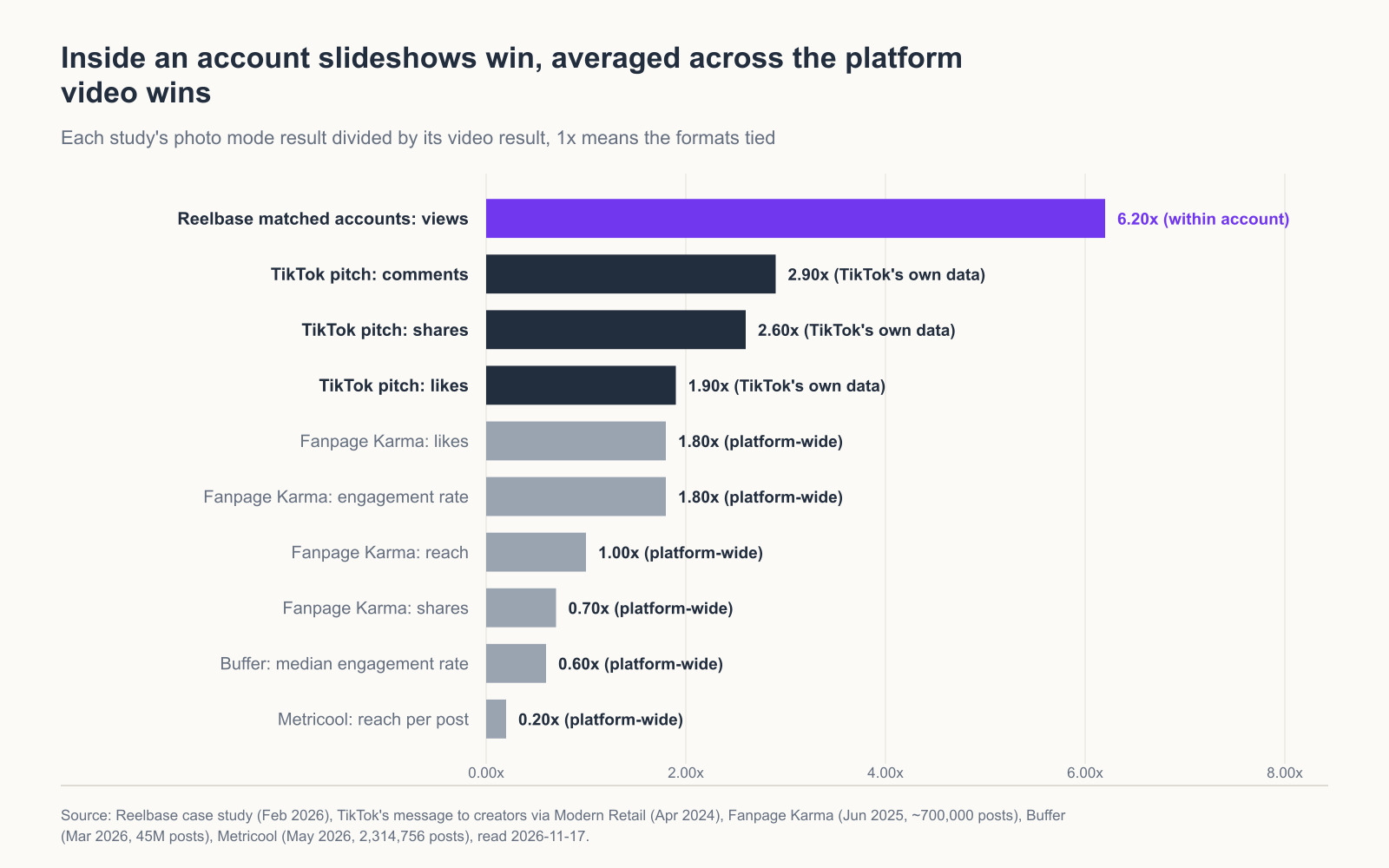
Figure 3. Each study’s photo mode result divided by its video result. 1x means the formats tied.
Metricool also counted carousel volume up nearly 140% in a year, and that surge is the posts the hiring threads below pay for: stock photos with text over them on dozens of brand-owned accounts, pulling the platform-wide number down. Inside one account, with audience, niche and posting habit held still, the format is the only thing that changes, and the slideshow wins. Comparing an account with itself is how we read game devlogs on TikTok, and how we pick formats inside social media programs for clients.
How many slides should a slideshow have?
A TikTok slideshow should have two to seven slides: the post that took an app from $1,000 to $5,000 a month had 2 slides, the team behind the matched-account test puts the sweet spot at 5 to 7 slides with 3 to 5 seconds of reading each, and TikTok caps a post at 35 photos, a number nobody who sells with slideshows gets near.
Slide one does most of the work. One operator’s rule: you double your chances of going viral when the first slide is made to go viral. On r/copywriting, the founder of a room design app kept the same visuals and changed only the first slide. Hooks about the app and his own flat drew 905, 879 and 2,671 views. A hook built on a landlord who said nothing in the flat can change, followed by an AI render of the room redone, drew 234,000, and the same shape with his mum drew 167,000. Everything outside that shape stayed under 10,000.
After slide one the job is to get the product on screen before the viewer leaves. The post that moved an app from $1,000 to $5,000 in monthly revenue in 7 days had 2 slides, AI-generated visuals and notification-style copy, with the app arriving on the second slide. The 5 to 7 range belongs to list posts, where the save is the goal.
Do TikTok slideshows make money?
TikTok slideshows make no money from TikTok itself: the Creator Rewards Program pays only for original videos one minute or longer and its terms exclude Photo Mode outright, so a slideshow with 5 million views earns $0 in rewards, and every dollar a slideshow makes comes from what slide two sells, an app install, a TikTok Shop product or a DM funnel.
The rule is written into TikTok’s Creator Rewards Program terms. An eligible video “must be one minute or longer” and “is not a Photo Mode video”, and it needs 1,000 qualified views of five seconds or more before it earns anything.
| Post type | Creator Rewards eligible | Why |
|---|---|---|
| Original video, one minute or longer | Yes | Meets the length and originality terms |
| Original video under one minute | No | Fails the one-minute term |
| Photo mode slideshow | No | Named exclusion in the terms |
| Duet or Stitch | No | Named exclusion in the terms |
| Repost or re-upload | No | Fails the originality term |
| Sponsored or paid promotion | No | Named exclusion in the terms |
OpenClip’s guide to slideshow money puts it at exactly $0 for a 5 million view slideshow. TikTok Shop affiliate commissions run 5% to 20%, and a link in bio converts 0.2% to 0.5% of viewers to a visit.
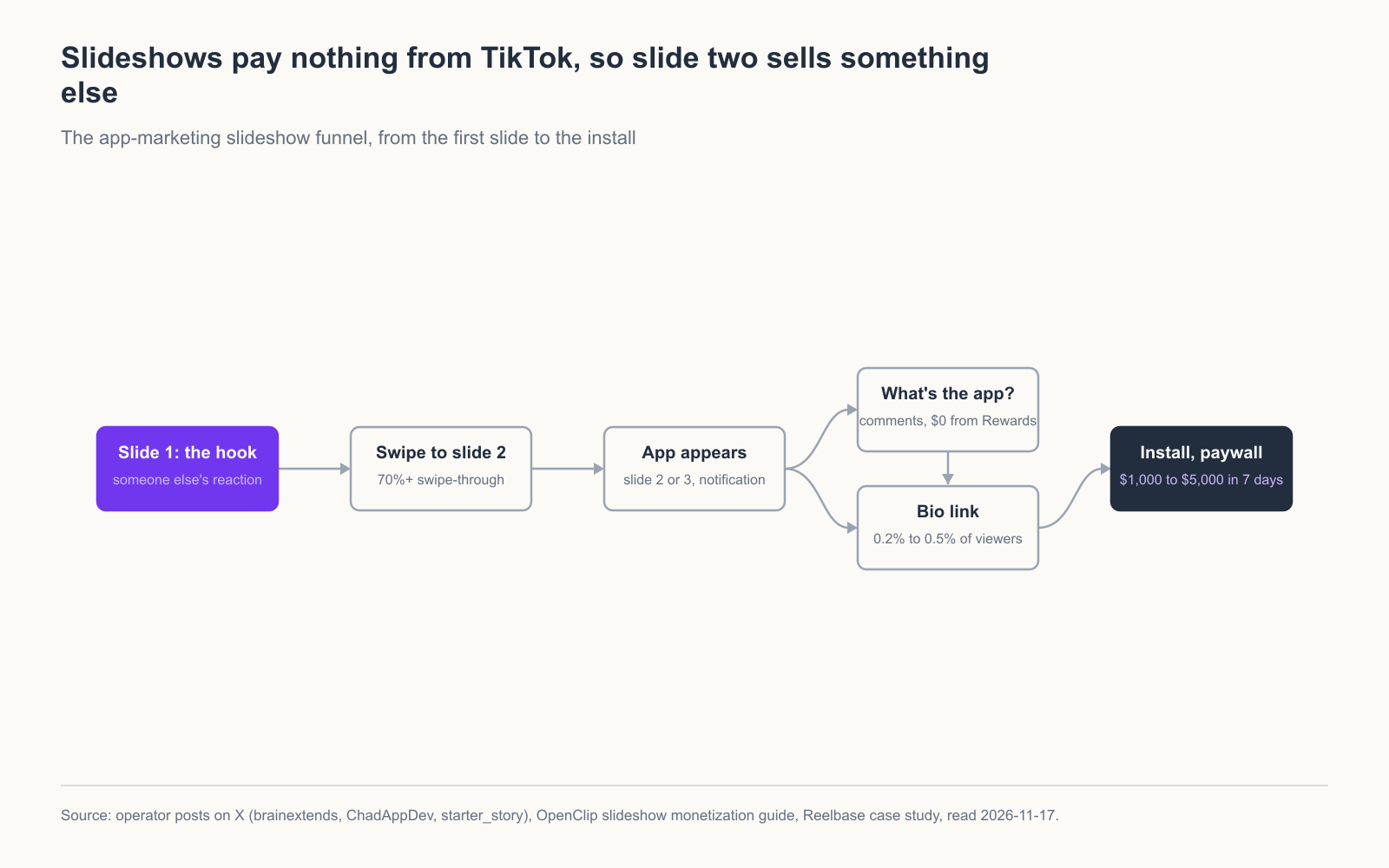
Figure 4. The app-marketing slideshow funnel, from the first slide to the install.
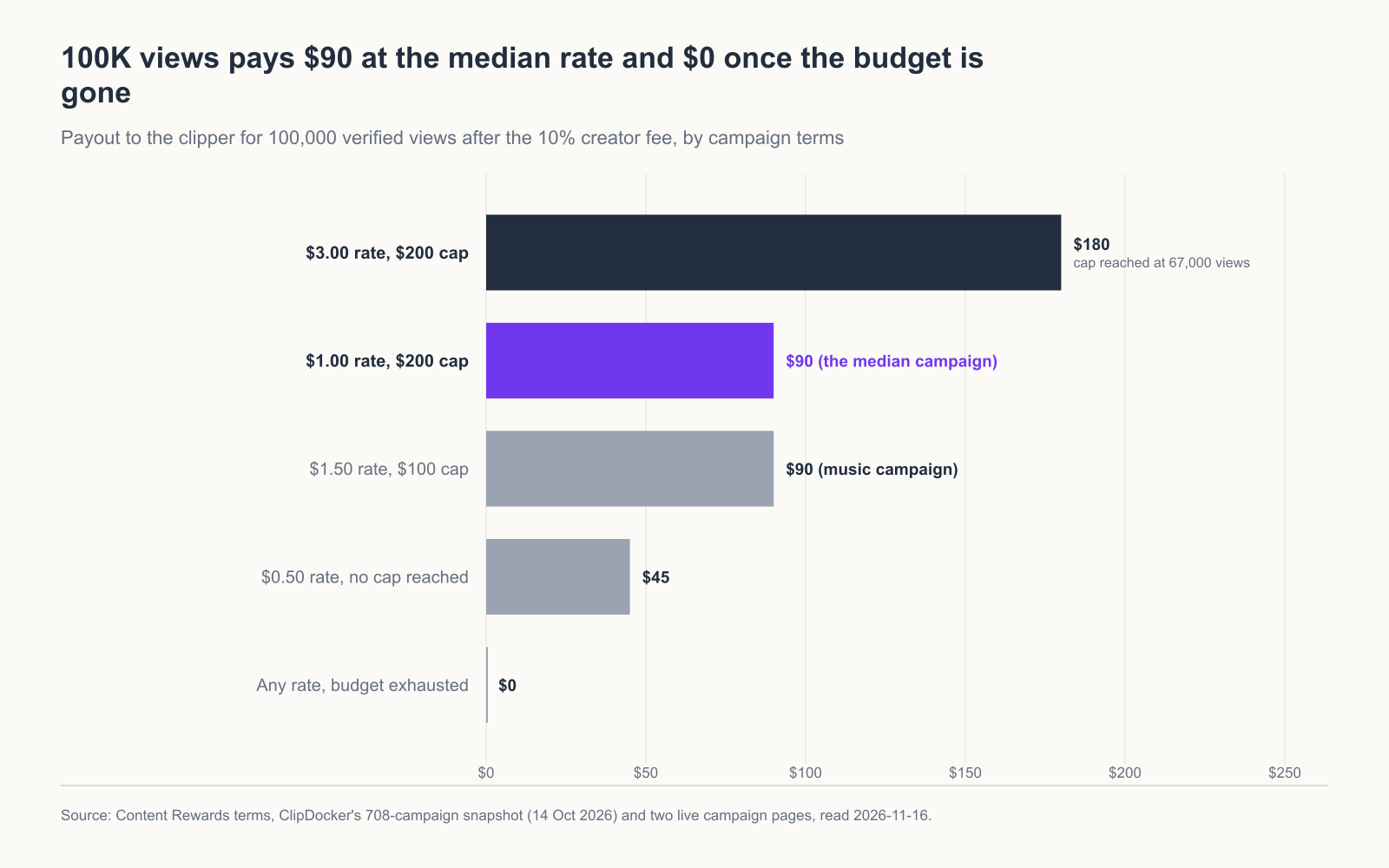
Brands pay for the format directly. A budgeting app offered a $15,000 starting budget for 15 to 20 creators to post carousels on brand-owned accounts, paid per 1,000 views. A second brand offered $150 for one slideshow a day on two accounts for a month. Per-view pay is the structure clipping platforms use, covered in how clipping pays, and the platform rules are in what YouTube, TikTok and Instagram pay for.
Why do operators insist on unique images?
Slideshow operators insist on unique images because TikTok fingerprints every upload and flags a newer post that crosses an 85% similarity score with an existing one, then caps its distribution instead of removing it, so a farm that reuses the same images across 15 accounts gets 14 posts pushed to almost nobody and one that runs.
Renderio’s breakdown of TikTok duplicate detection describes a perceptual hash of the frames that survives a crop or a filter, an audio fingerprint, and account metadata. MetaGhost’s reposting guide gives the threshold: when two posts exceed an 85% similarity score, the newer upload is flagged and its distribution capped, and its first rule for networks is never to batch-post the same file to several accounts at once.
Slideshow operators treat unique images as a hard rule. One operator’s launch protocol ends a new account’s warm-up with a single non-promotional slideshow on a trending sound from the last 7 days, and unique images only, because TikTok hashes duplicates across accounts. If that post clears 1,000 views in 24 hours, the account is cleared. A capped account looks like the r/TikTok thread Plummeting views after promote: 1,000 to 10,000 views a post dropping to a 300 to 500 floor.
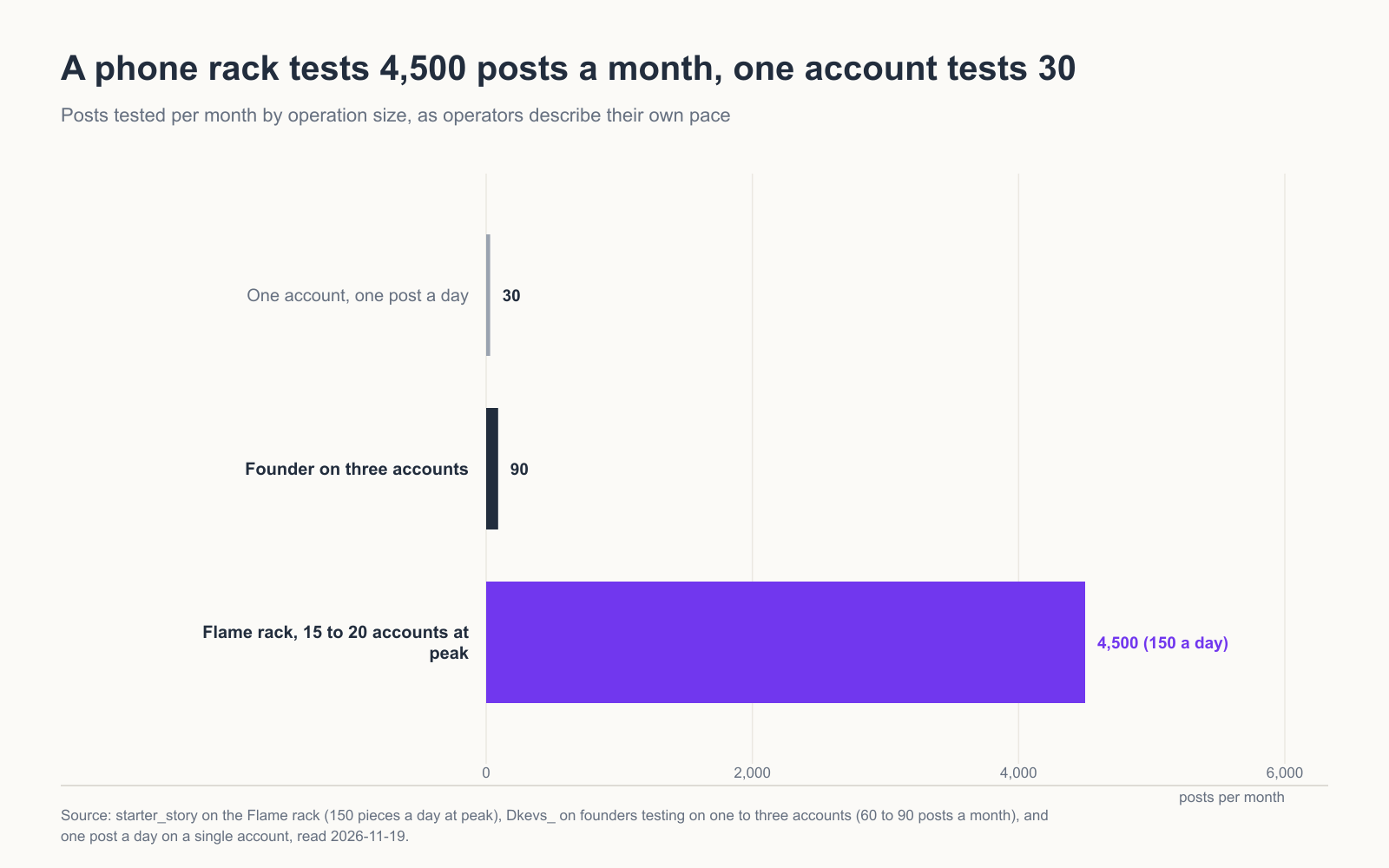
The founder of the couples app Flame runs 15 to 20 TikTok accounts across 4 to 5 physical phones, at peak producing 150 pieces of content a day to test one hook. Another operator’s example account runs 11.5 million views on Arcads-generated carousels, posting on 3 to 4 accounts a day. Running that many accounts is its own discipline, covered in how content farms run dozens of accounts, and one creative per account is how we run faceless account programs on the right side of the rule.
The app-marketing slideshow playbook
Seven steps, assembled from the operators in our X corpus.
- Write slide one as someone else’s reaction. The landlord and mum hooks drew 234,000 and 167,000 views against 905 for a hook about the app.
- Use notification-style copy over AI visuals. The $1,000 to $5,000 post was two AI-generated slides with copy styled as a phone notification.
- Put the app on slide two or three, as the answer to slide one, not as an ad.
- Make 50 variants of a format that works. Different hook, image, notification and call to action on each, and accept that 90% die.
- Post one slideshow a day per account. The $1,000 a month recipe is one slideshow a day with at least 1,000 views a post, a hard paywall, and exact-match Apple Search Ads.
- Judge a format by the comments. Flame’s test: 100,000 views from an account under 5,000 followers, 100 copies without burning out, and commenters asking what the app is.
- Measure installs against the post. The founder of a grocery budget app logged a 34,000 view slideshow with no install bump and a 60,000 view one that tripled new users. The second is the format to copy.
Hi Violet builds slideshow programs for apps and TikTok Shop sellers inside faceless account programs and social media programs, with unique creative on every account and installs read against each post, so the variant we scale is the one that converts. To run this on accounts you own, request a strategy call.
How we did it
We pulled 480 X posts from 2026-09-01 to 2026-11-17 across eight searches through Apify’s tweet scraper by apidojo, and 1,227 Reddit posts from the last 30 days across 43 searches through Apify’s Reddit scraper by harshmaur. We counted the X posts that mention slideshows, carousels or photo mode (78 of 480) and the Reddit threads where a brand is hiring slideshow creators (four, one cross-posted to two subreddits). The platform facts come from TikTok’s Creator Rewards Program terms and its help page on making a post, and the study numbers from Reelbase, Fanpage Karma, Buffer, Metricool, Modern Retail, the OpenClip and Reelflood slideshow guides, and the Renderio and MetaGhost duplicate-detection write-ups, all read on 2026-11-17.
FAQ
Why do TikTok slideshows get more views than videos?
Photo mode is its own post type, a swipe is an active engagement signal, and a slideshow takes 30 minutes to make against 65 for a video. On matched accounts, photo posts averaged 58,000 views against 9,400 for video, 6.2x.
How much more do slideshows get than videos?
Inside the same account, 6.2x the views and a 5.7% save rate against 0.7% in the one matched-account test. Across the whole platform the order flips: Metricool’s 2,314,756-post study found video drew 5x the reach of images and carousels.
Do TikTok slideshows make money?
Not from TikTok. The Creator Rewards Program pays only for original videos one minute or longer and excludes Photo Mode, so a 5 million view slideshow earns $0. The money is in what slide two sells: an app install, a TikTok Shop product, or a DM funnel.
Can you get paid from TikTok photo mode?
Not through the Creator Rewards Program, whose terms exclude Photo Mode by name. Brands pay instead: one budgeting app hired 15 to 20 creators at a rate per 1,000 views, another paid $150 for a slideshow a day on two accounts for a month.
How many slides should a TikTok slideshow have?
Two to seven. The post that took an app from $1,000 to $5,000 a month had 2 slides, and the matched-account test’s authors put the sweet spot at 5 to 7 slides with 3 to 5 seconds of reading each. TikTok allows up to 35.
Why is my slideshow getting more views than my videos?
The swipe counts as engagement and a slideshow holds its views longer. Photo mode completes at about 80% against 20% for video, and a slideshow collects 25% of its 30-day views after day seven while a video has 95% of its views in the first week.
How long does it take to make a TikTok slideshow?
About 30 minutes against 65 for a video in the 90-day matched-account test: 10 minutes of planning, 12 finding images and 8 adding text. An auto-generated carousel costs about $0.48 against $3 to $5 for an AI UGC video, which is why slideshow accounts post daily and make 50 variants of a winner.